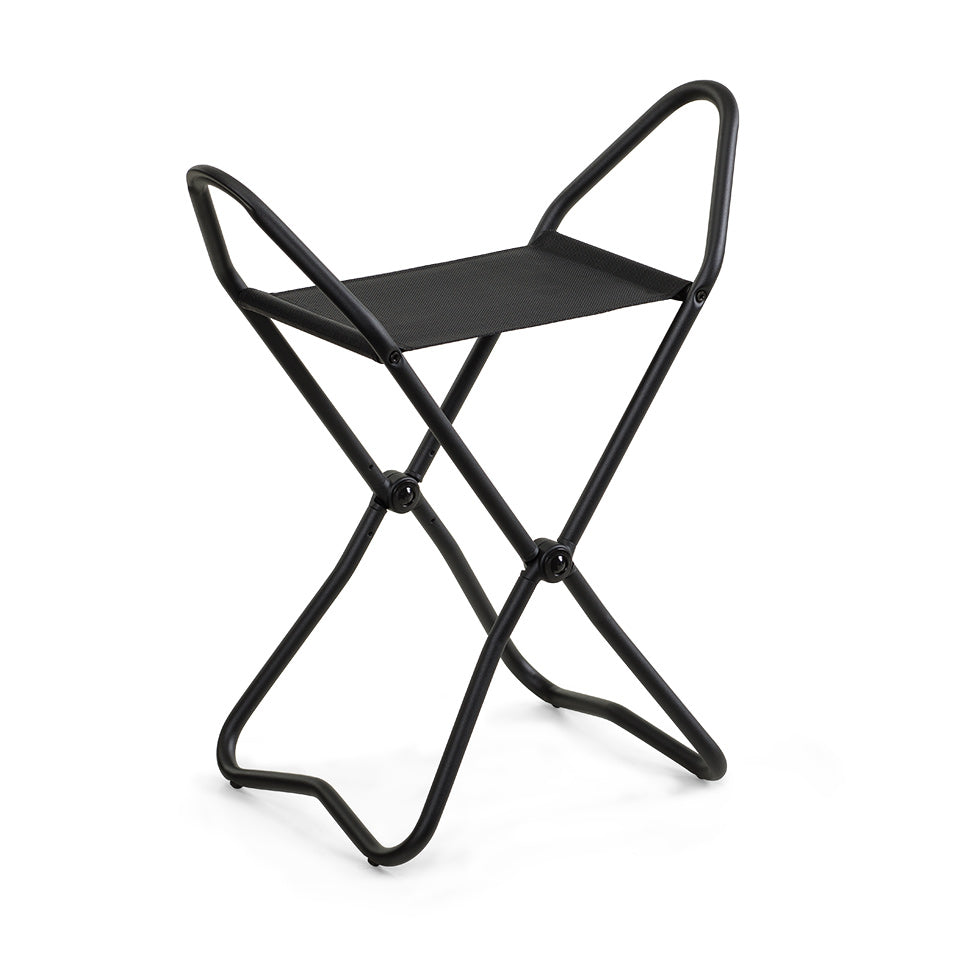
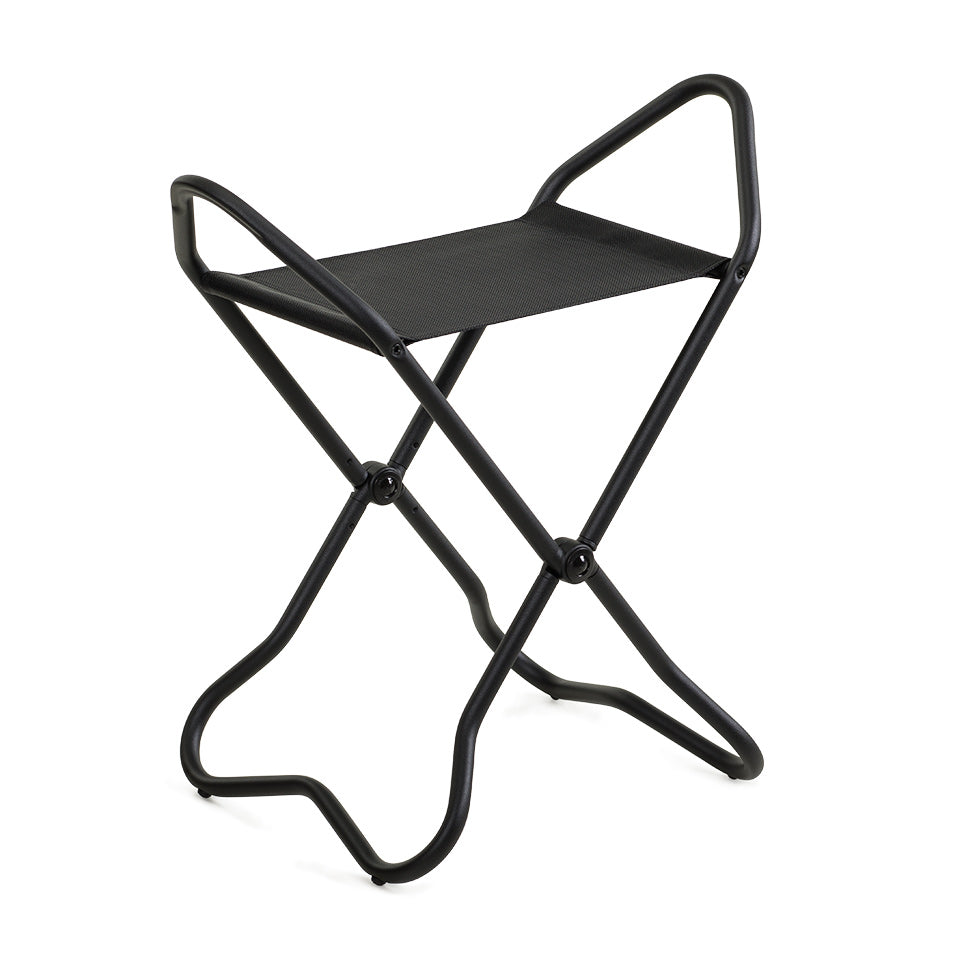
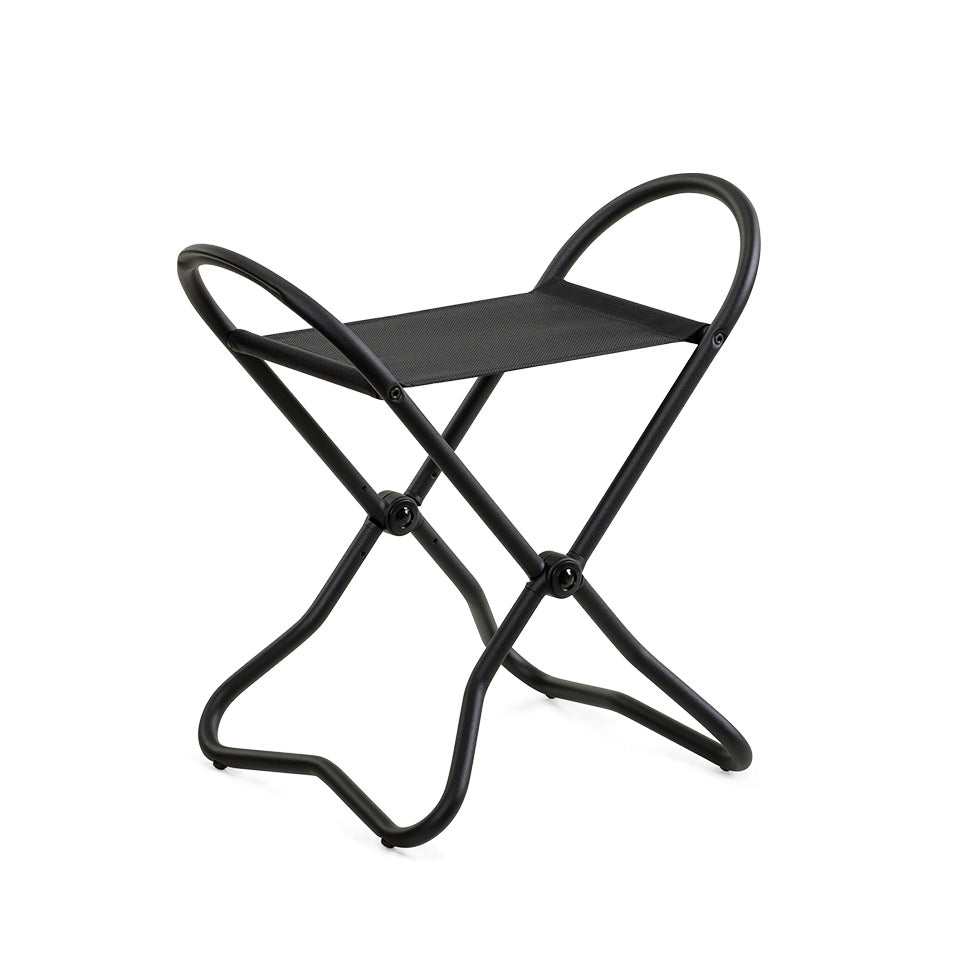
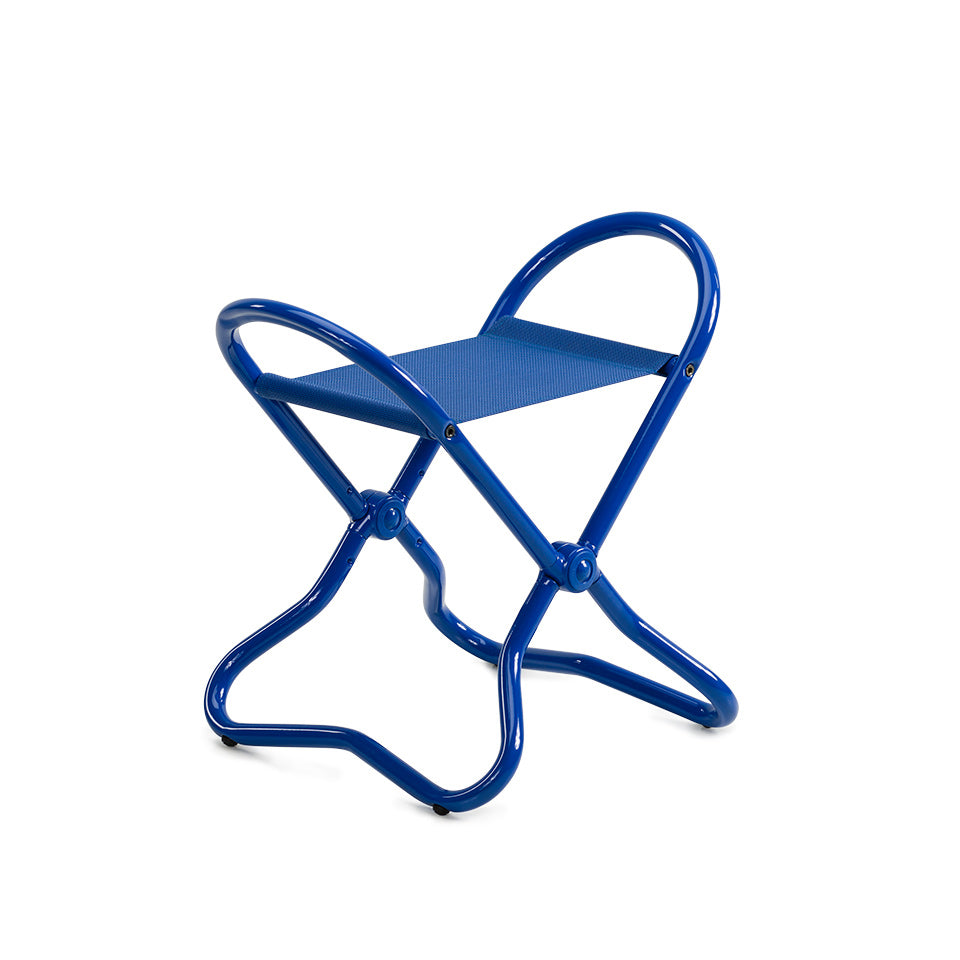
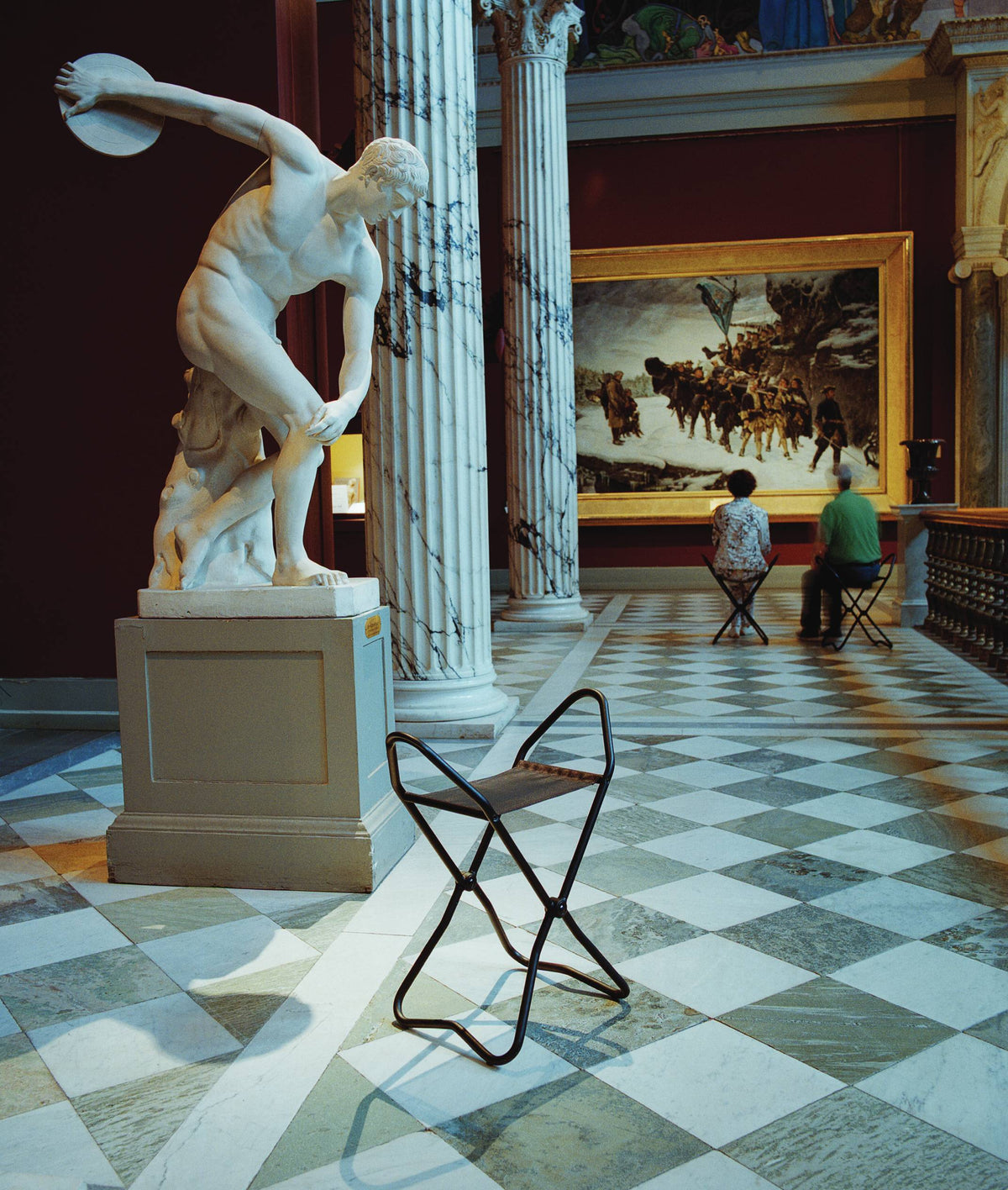
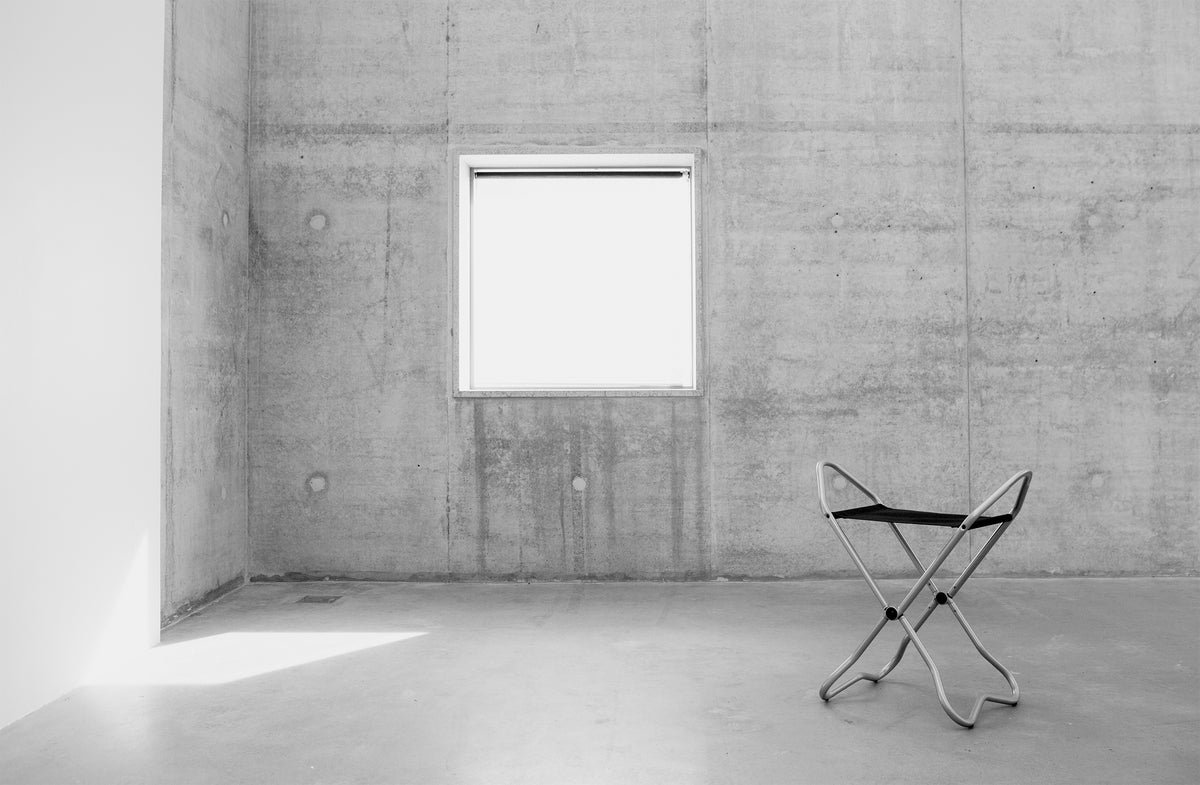
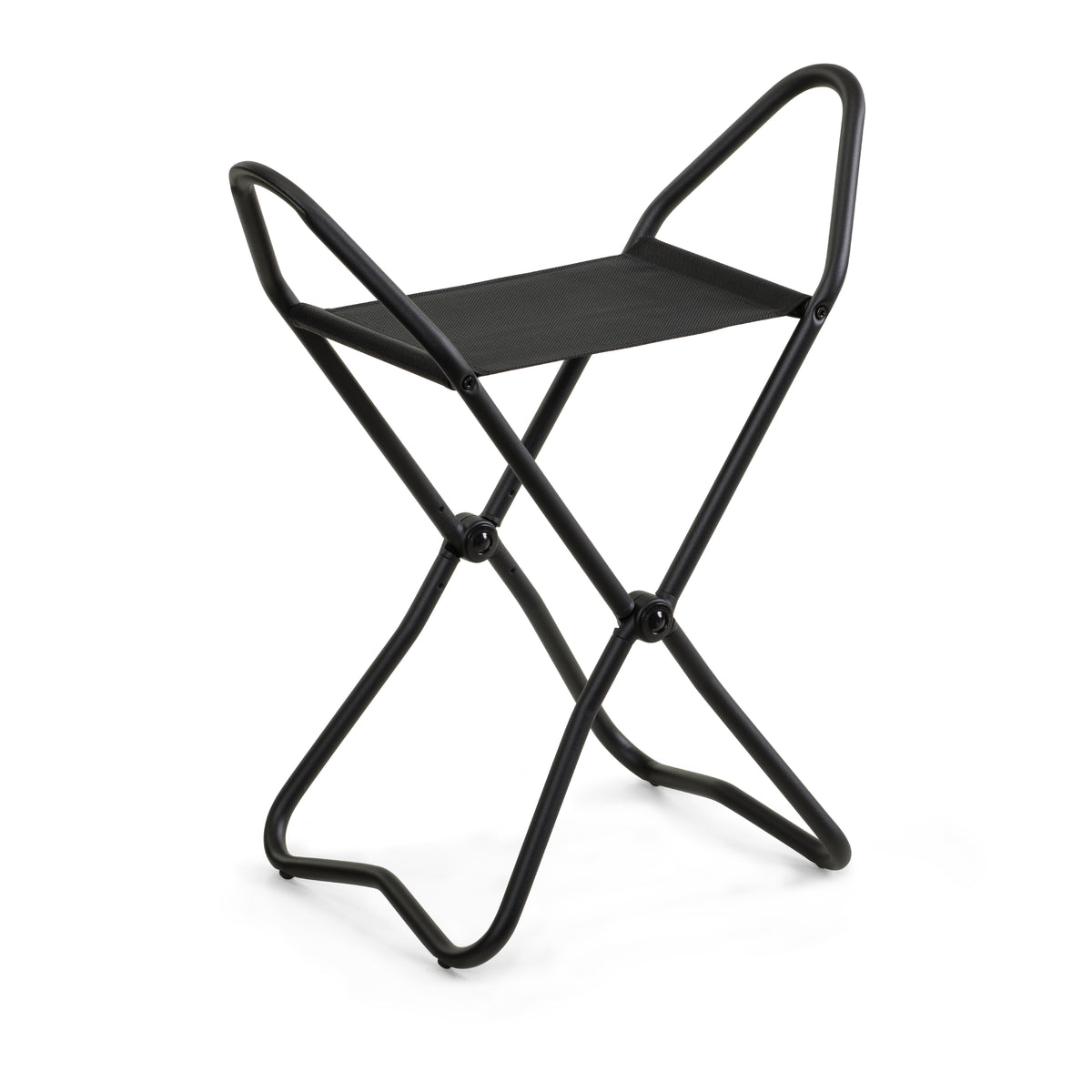
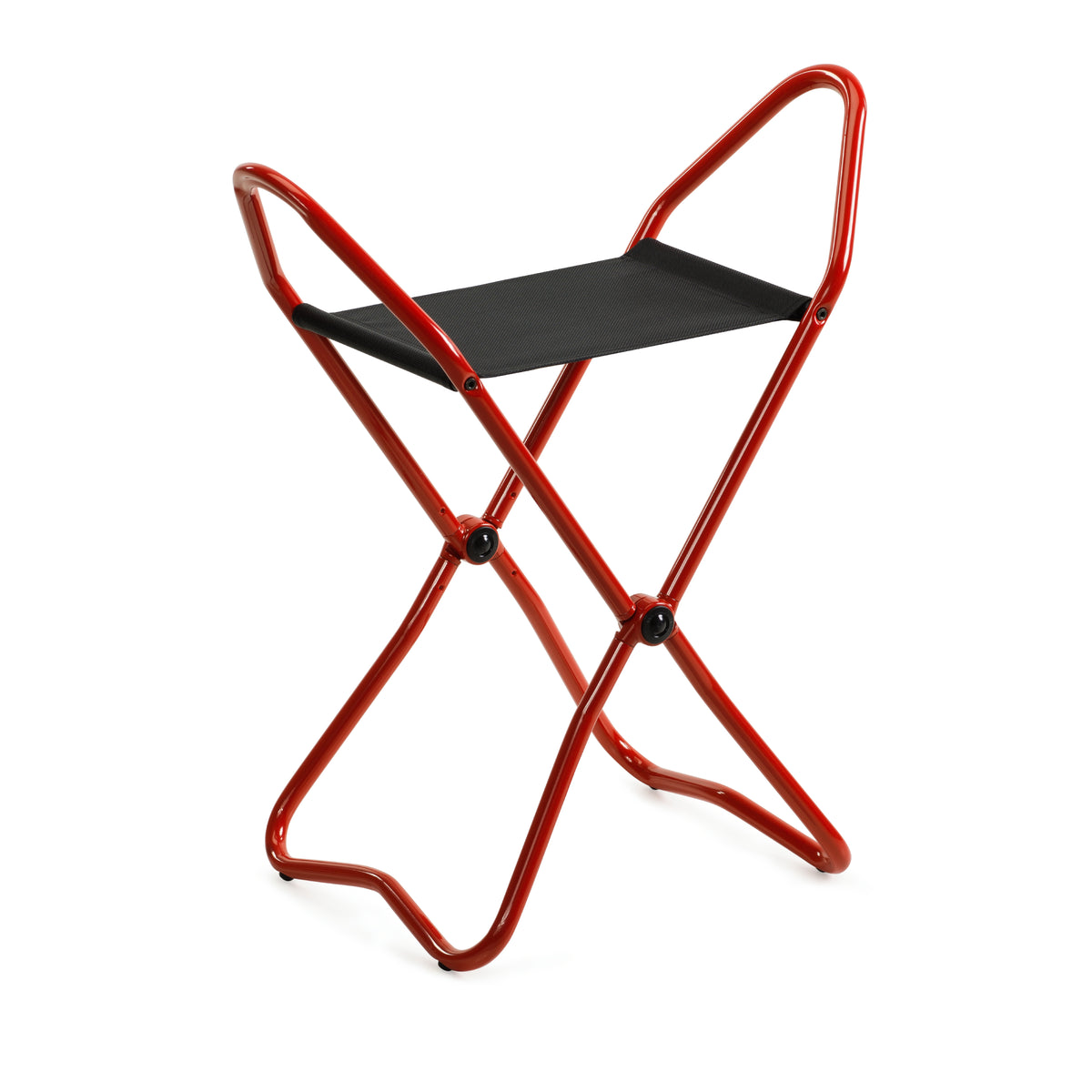
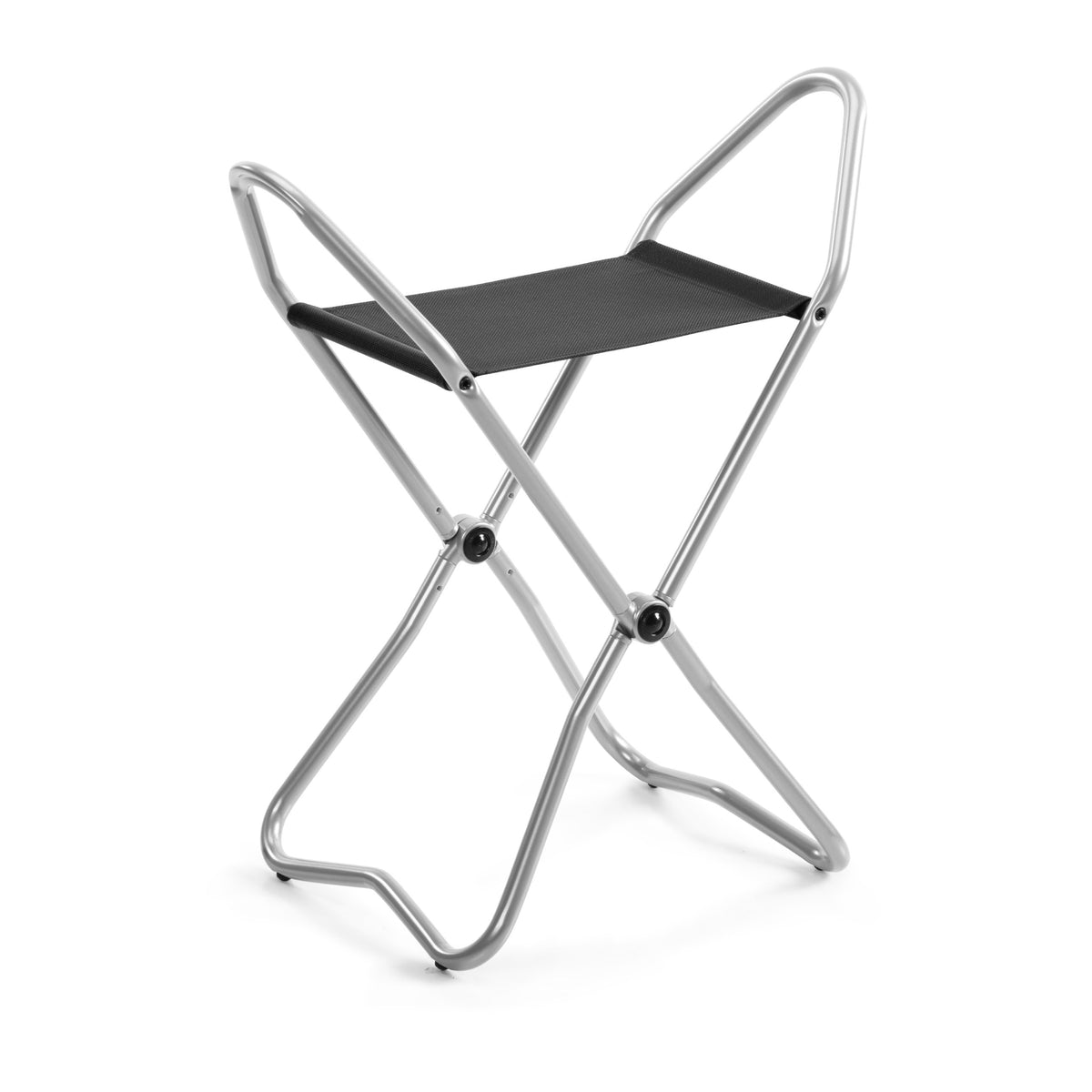
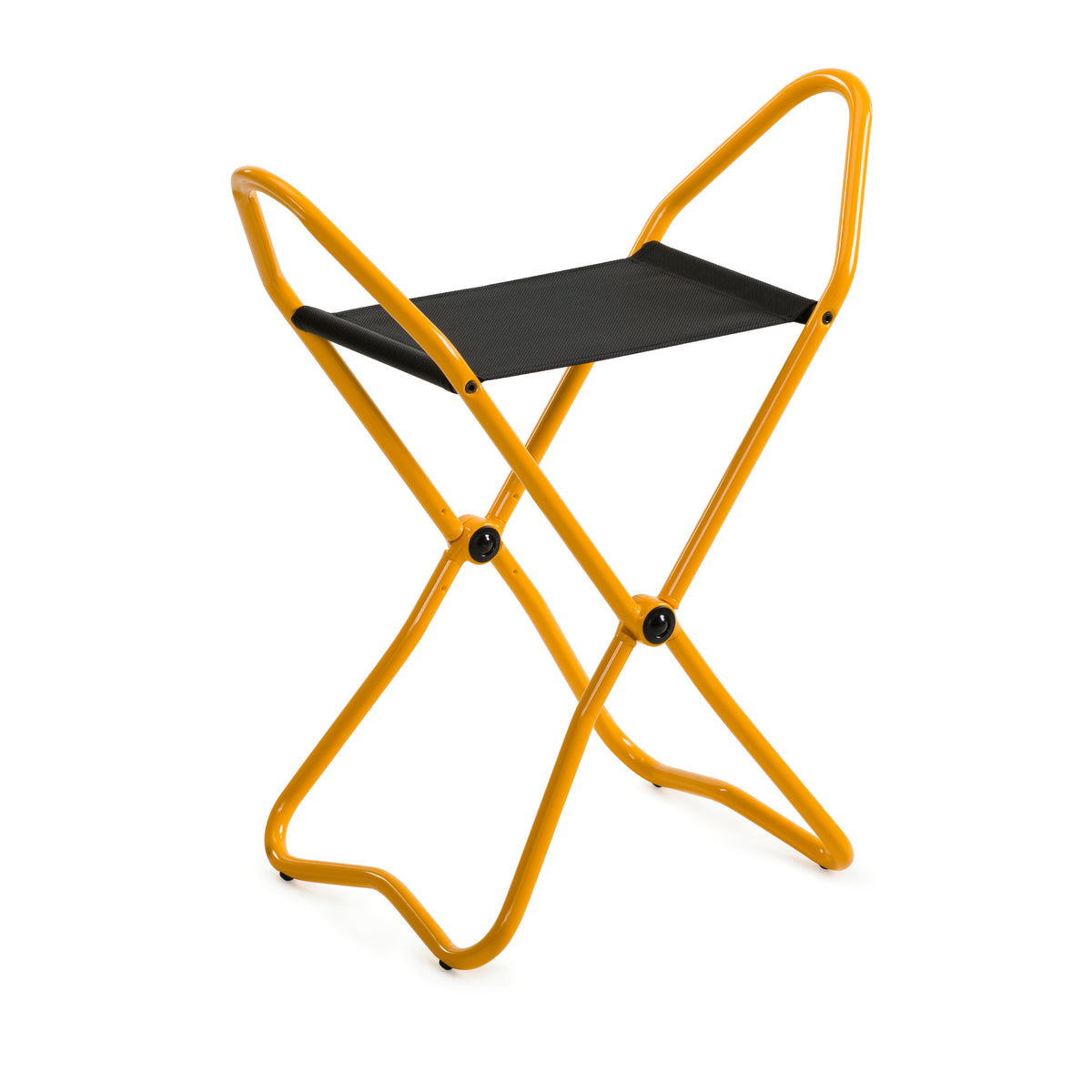
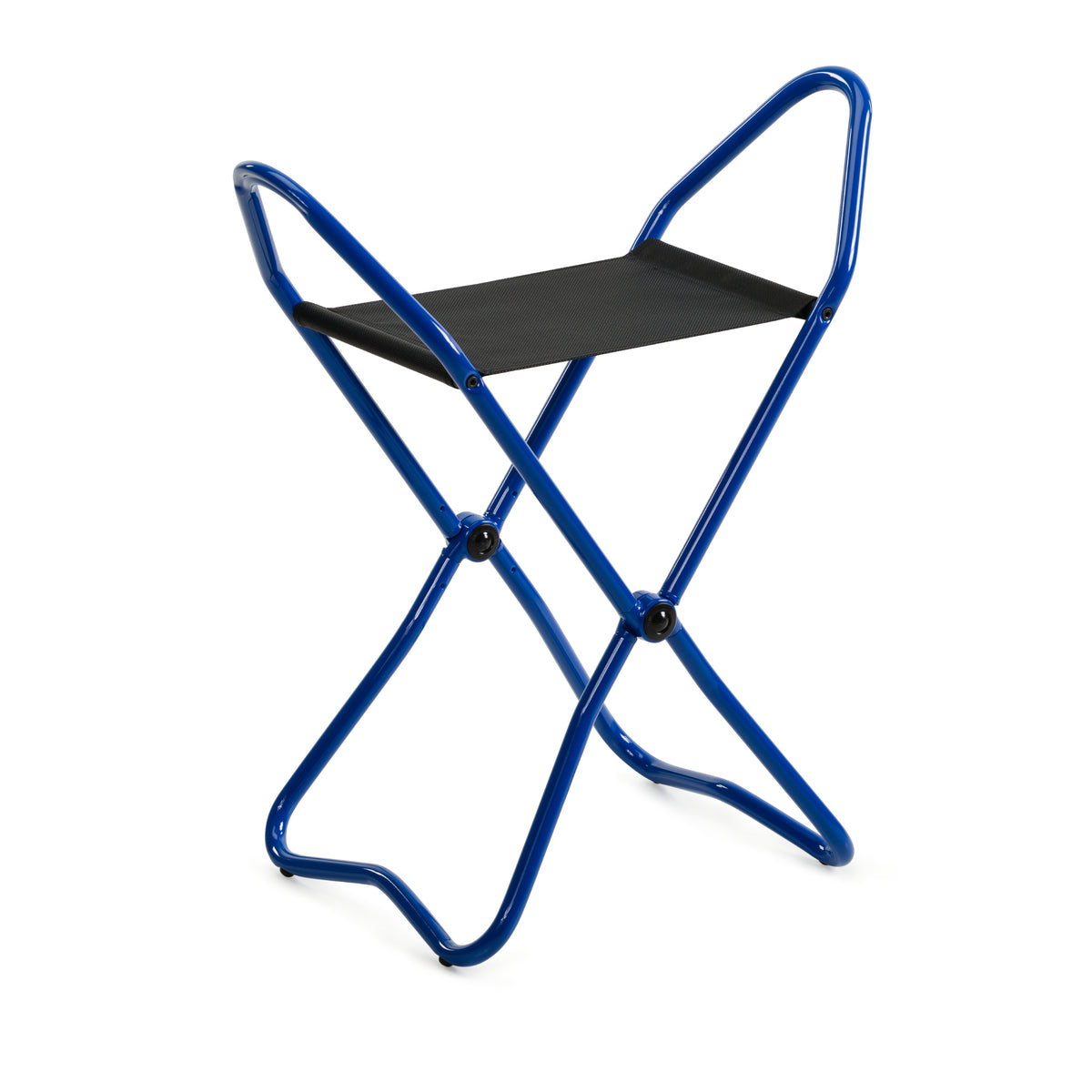
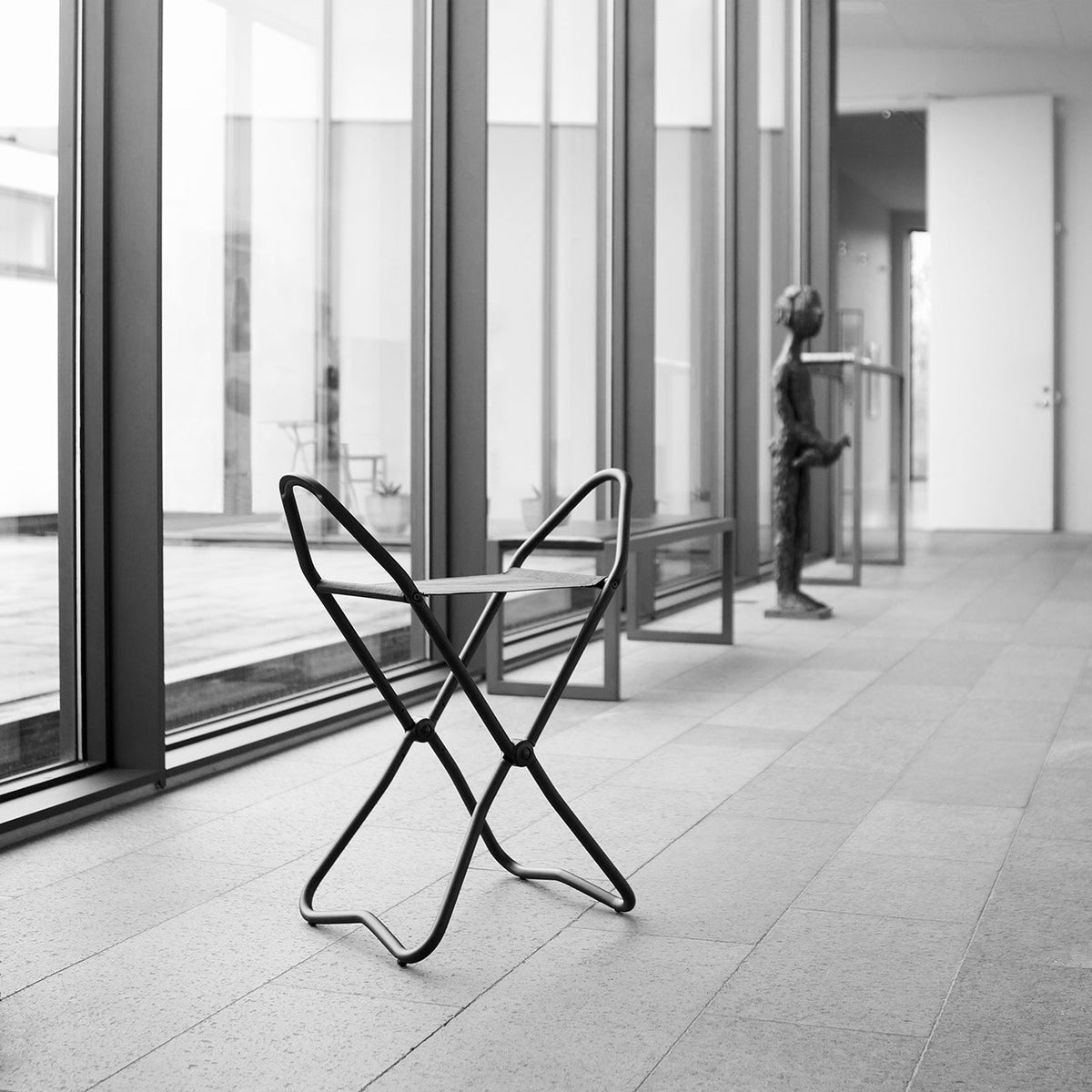
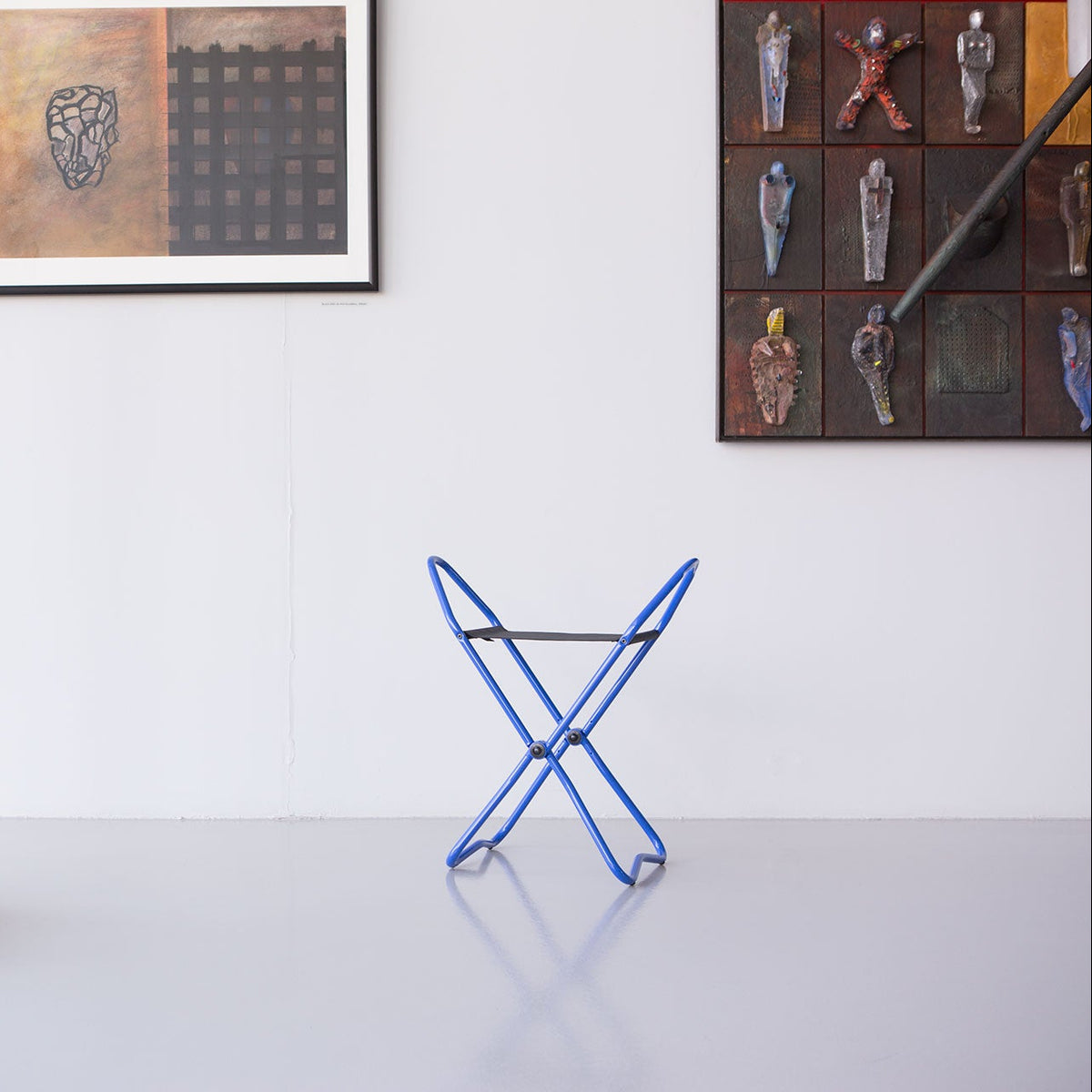
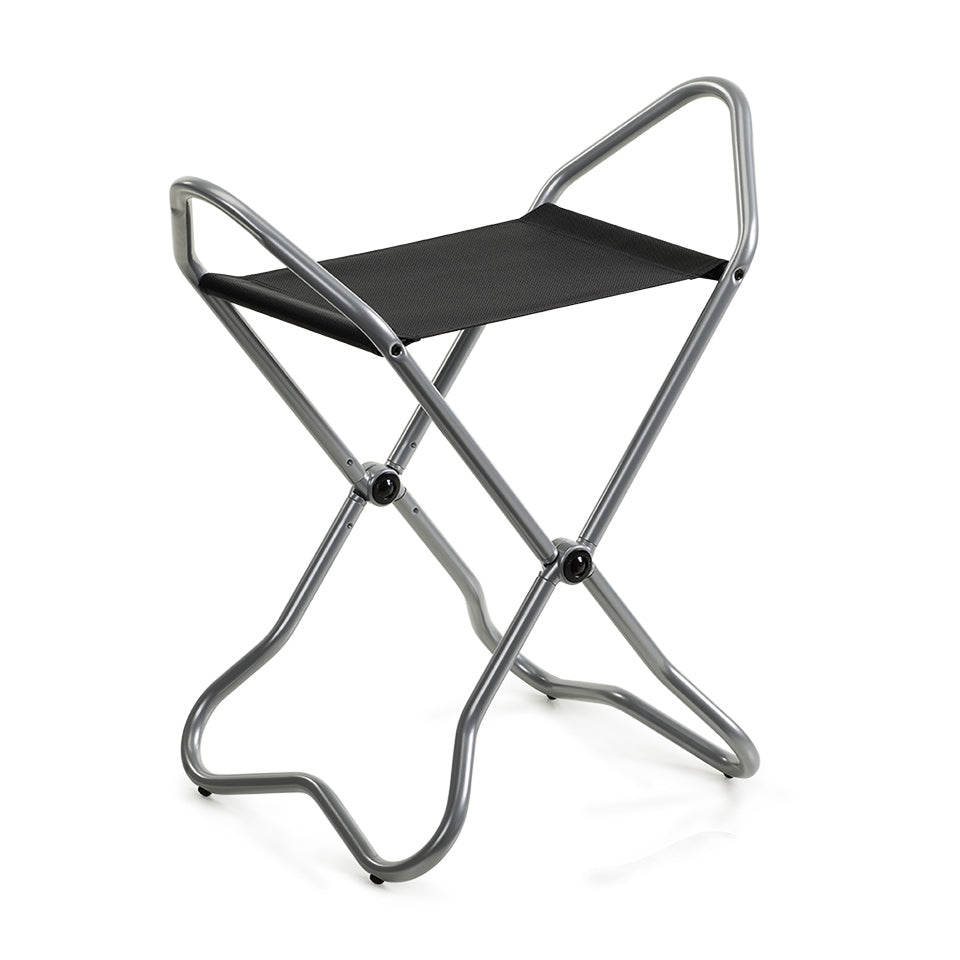
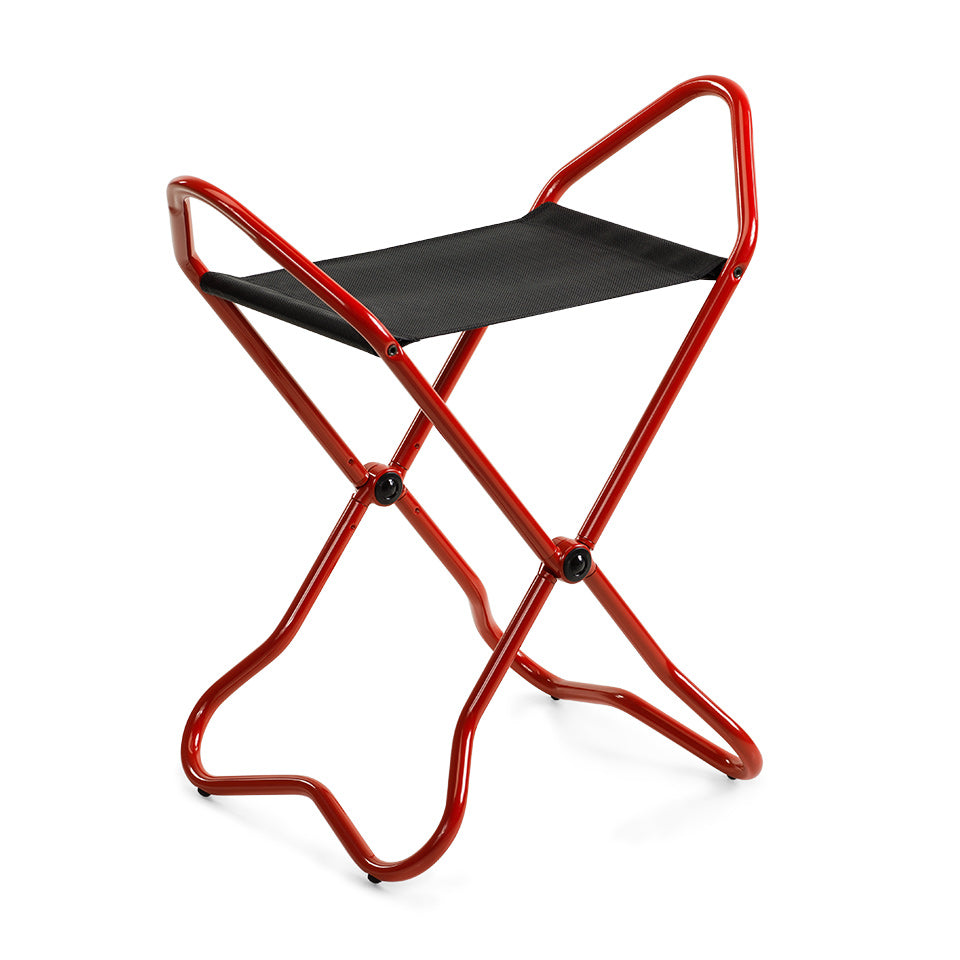
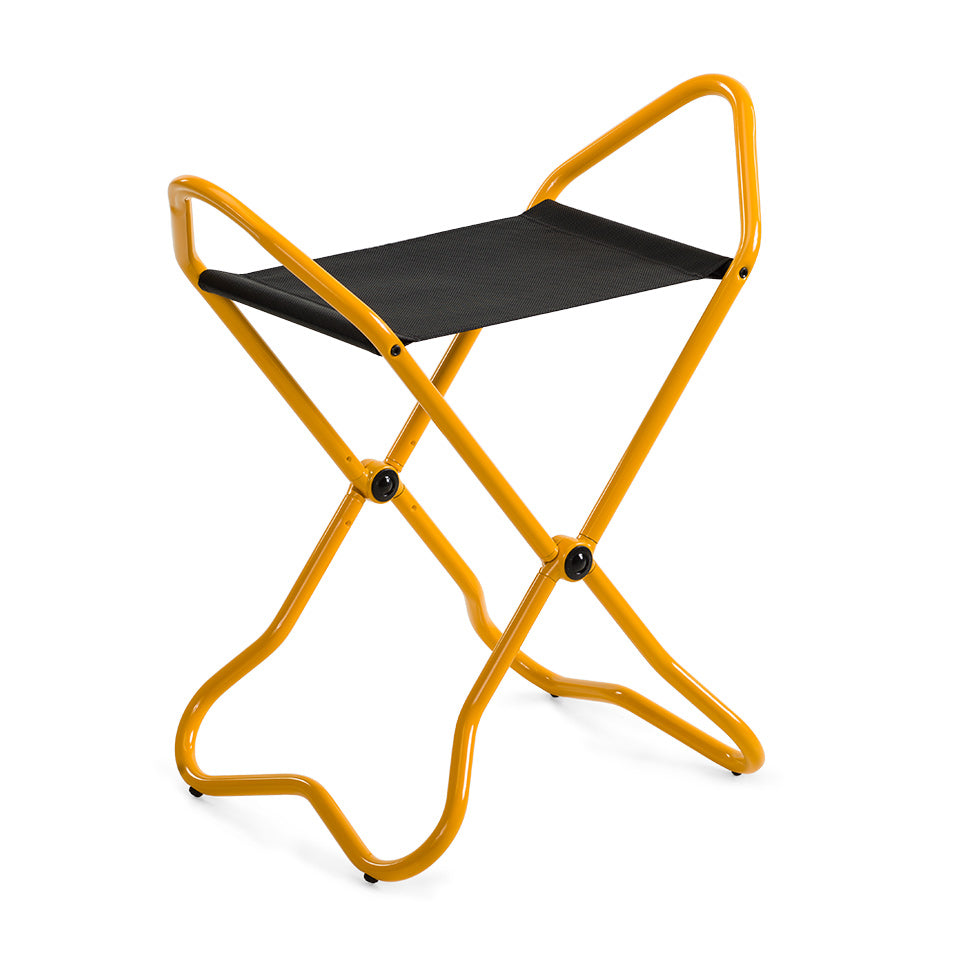
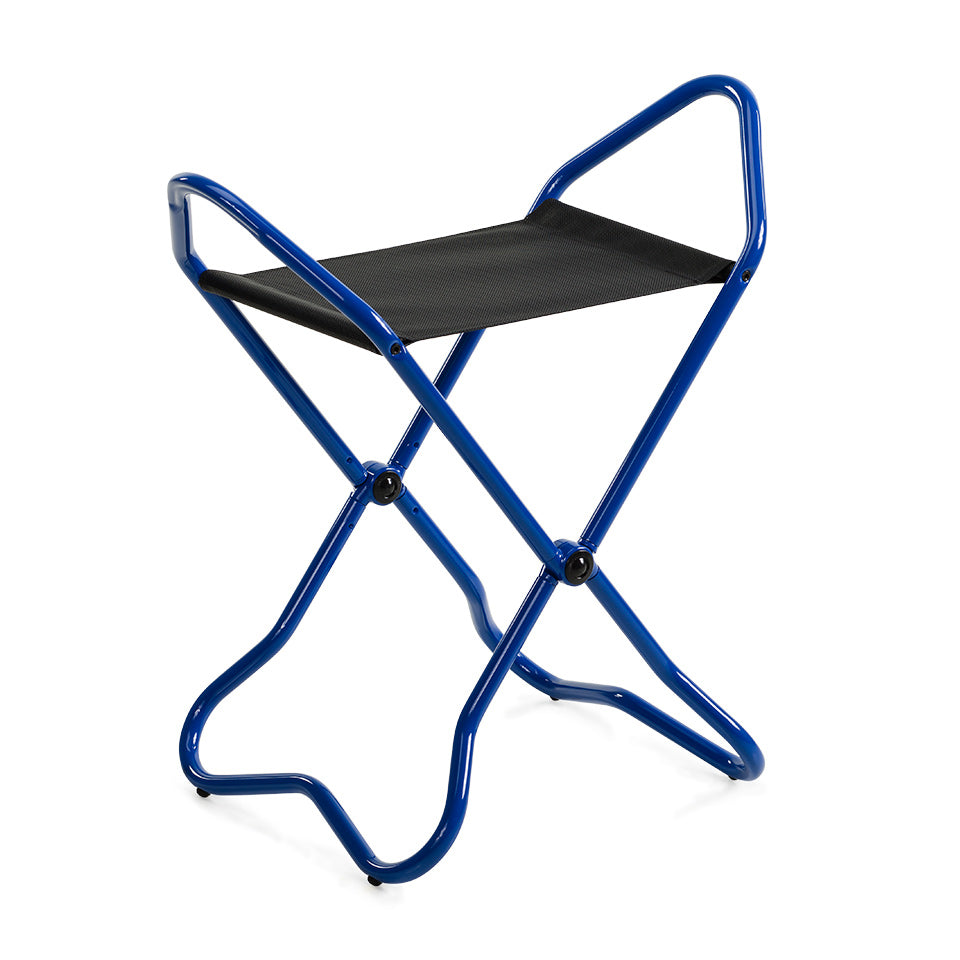
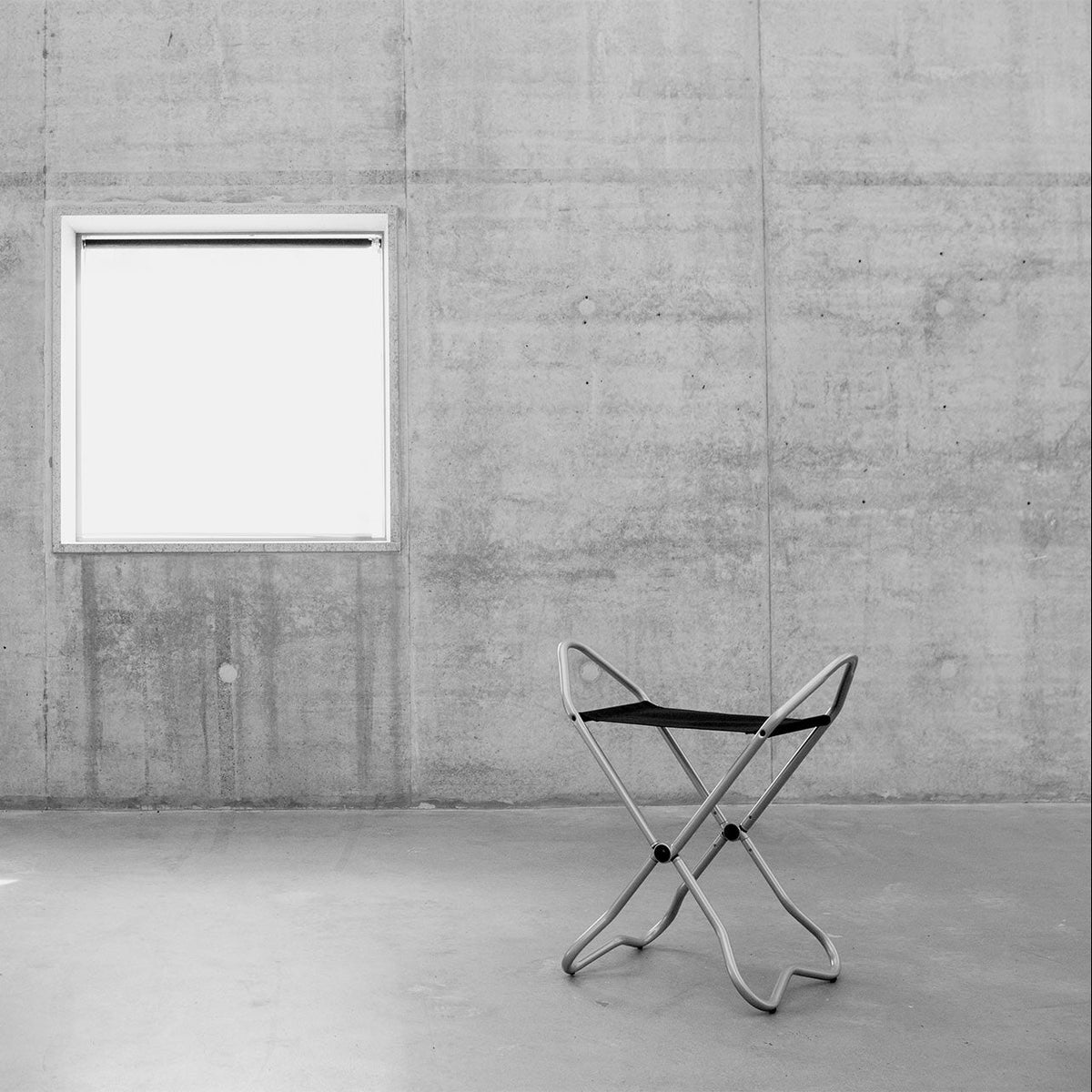
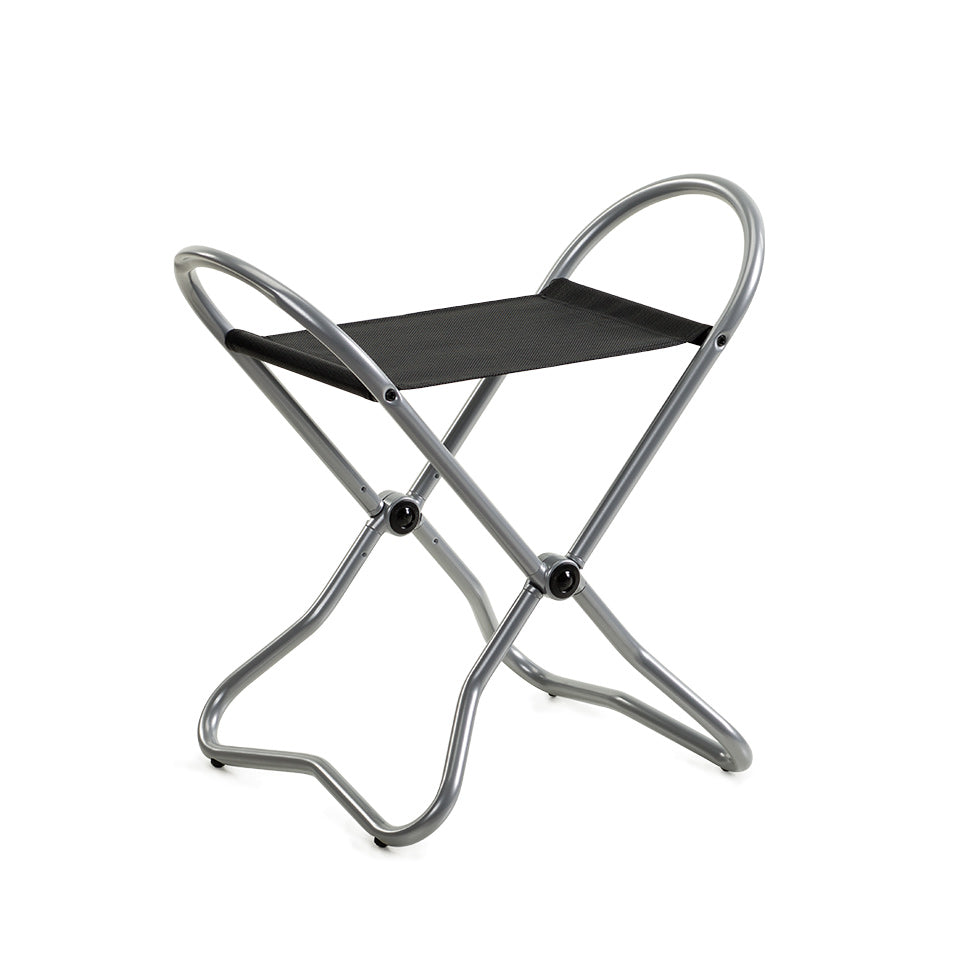
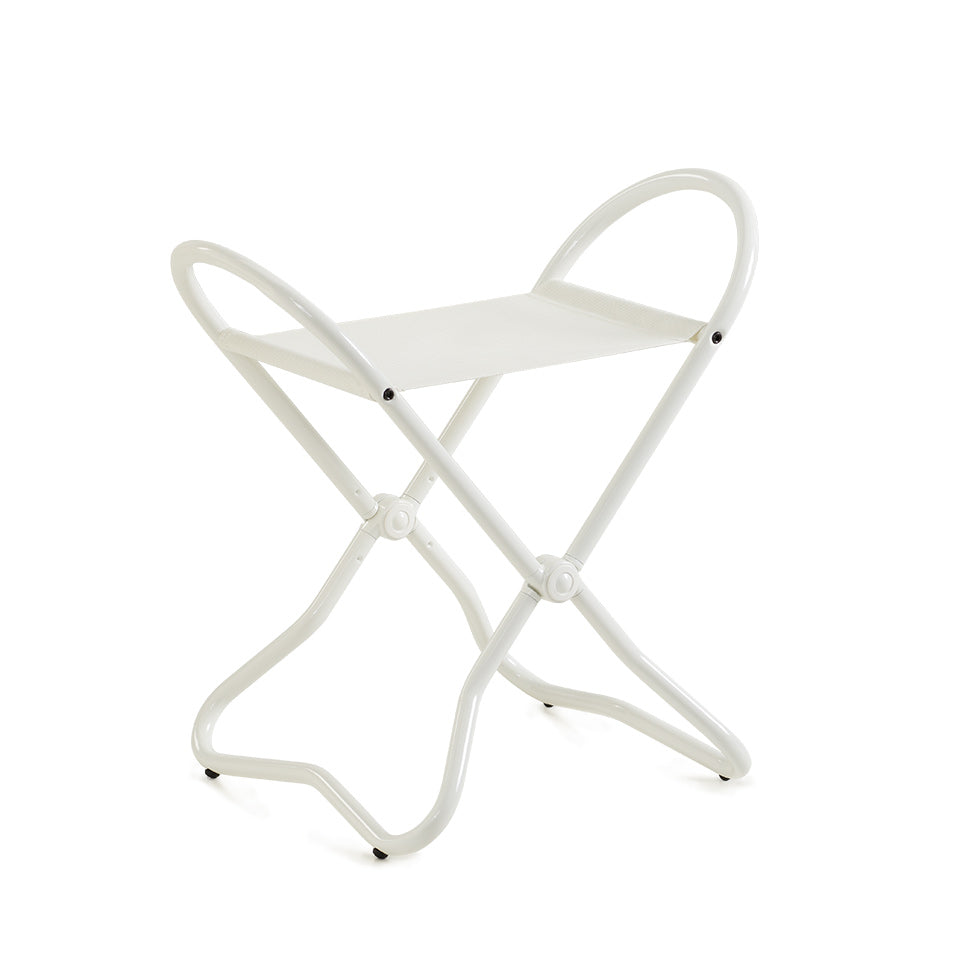
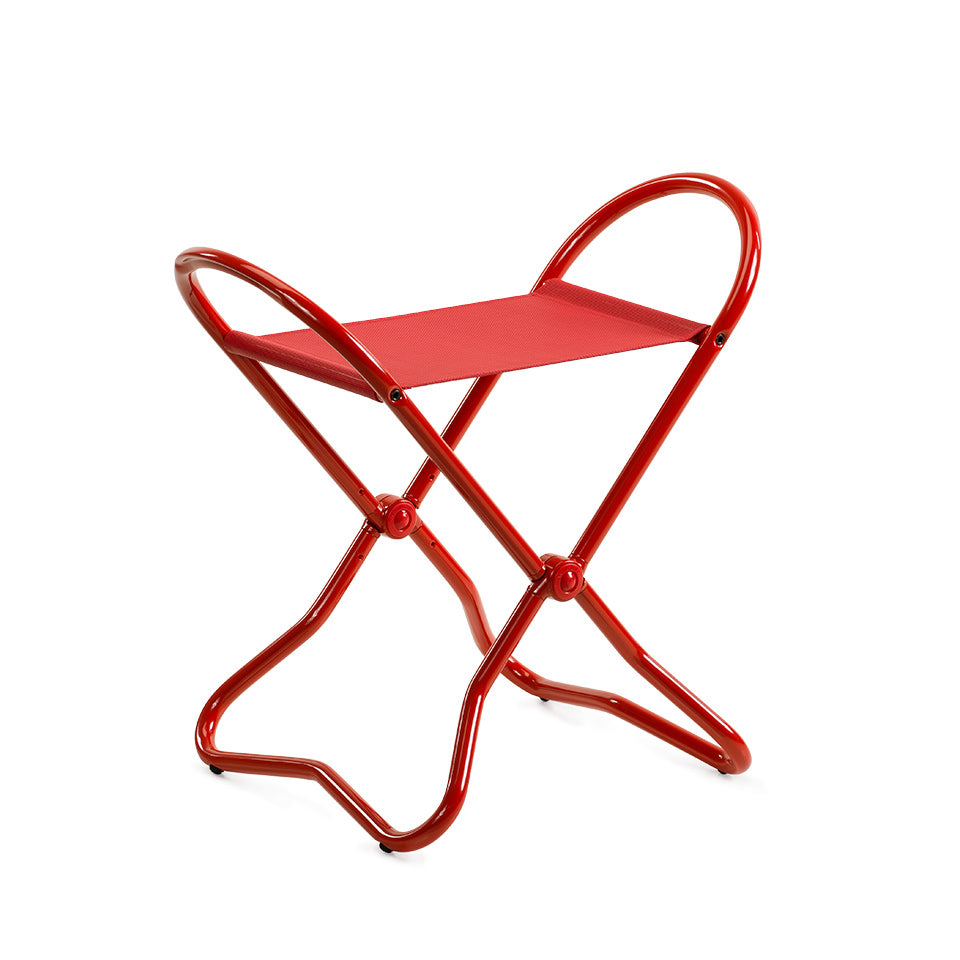
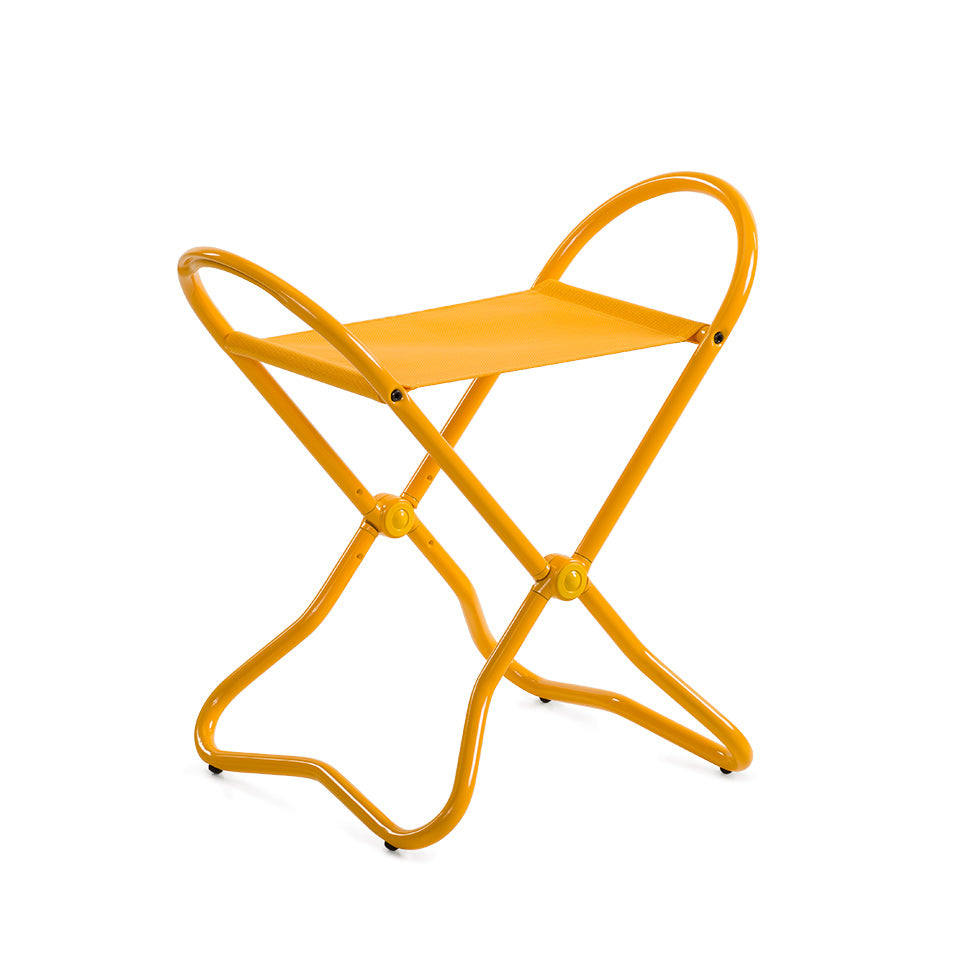
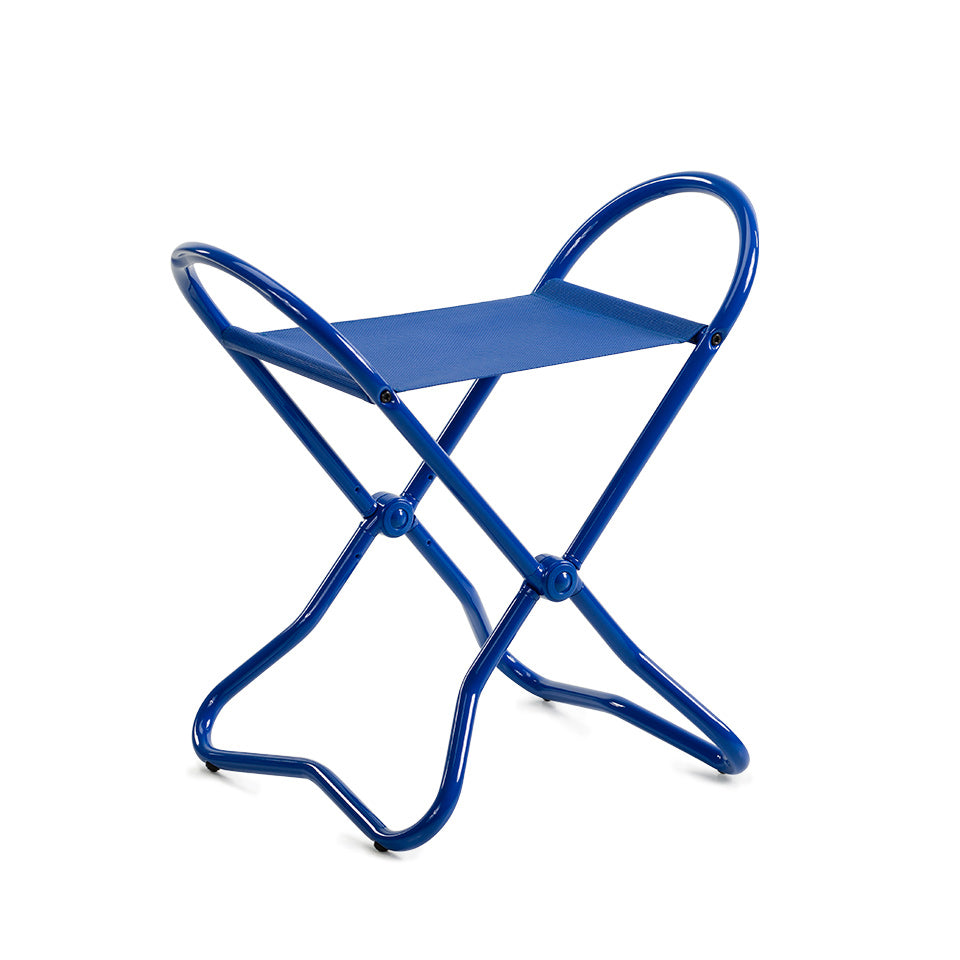
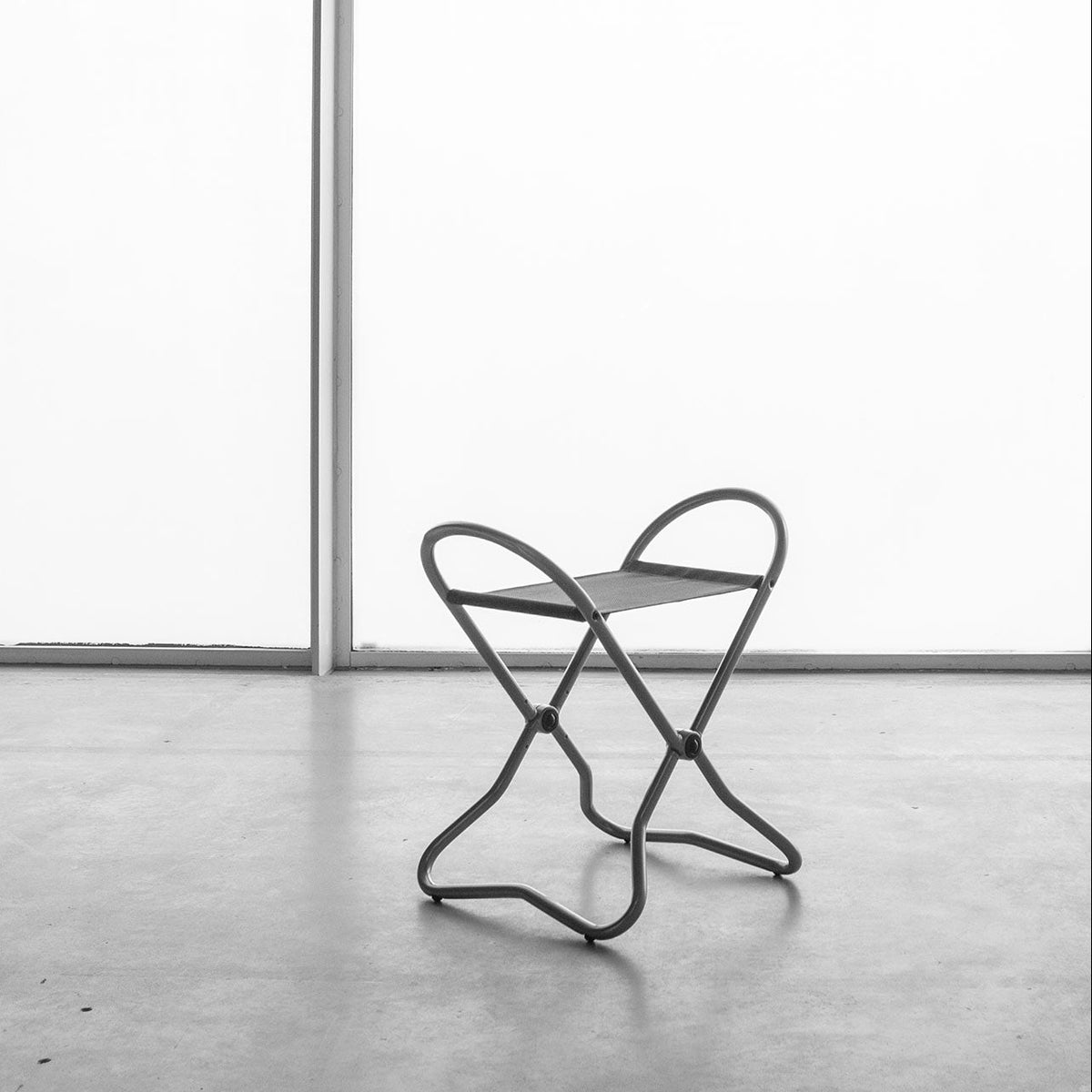
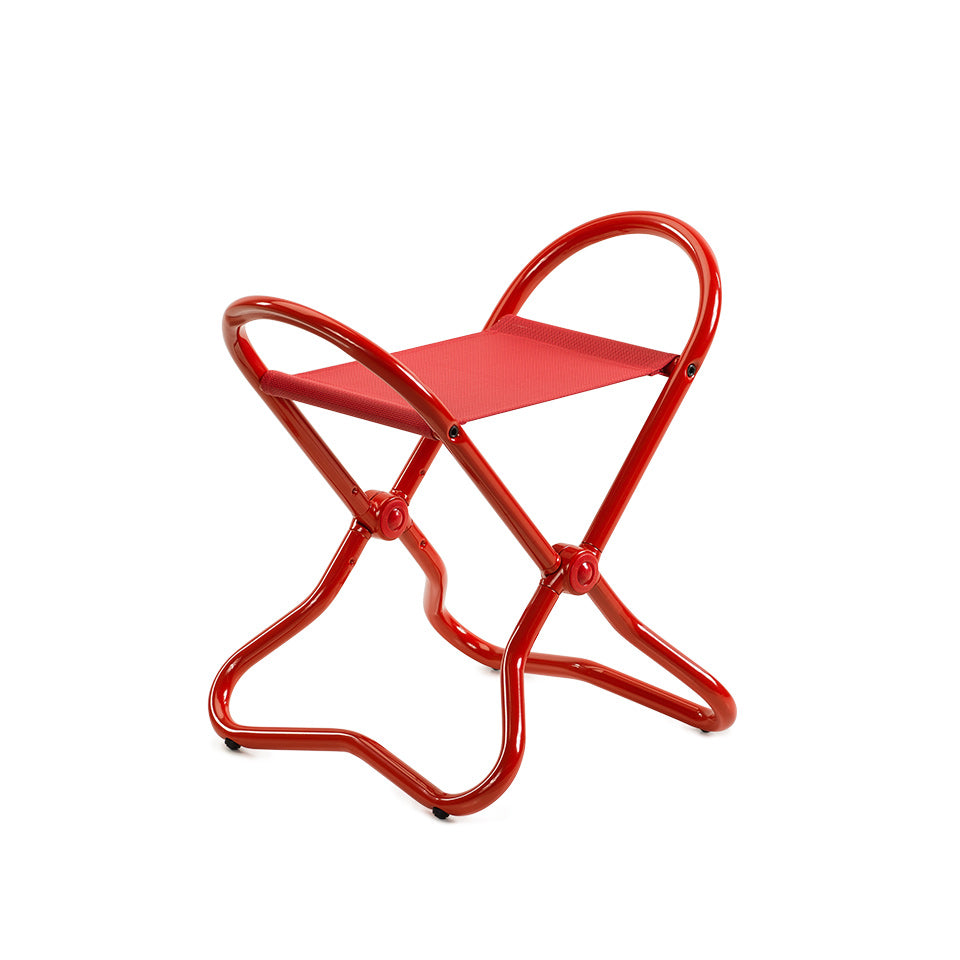
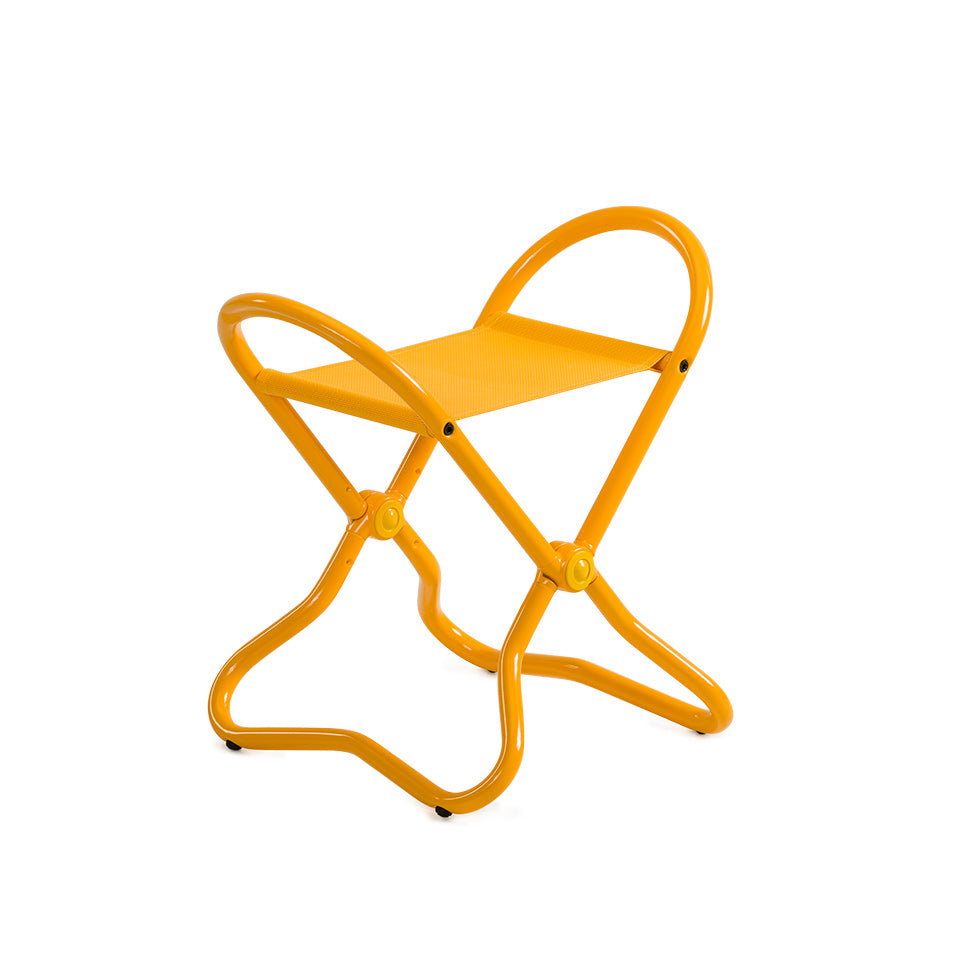
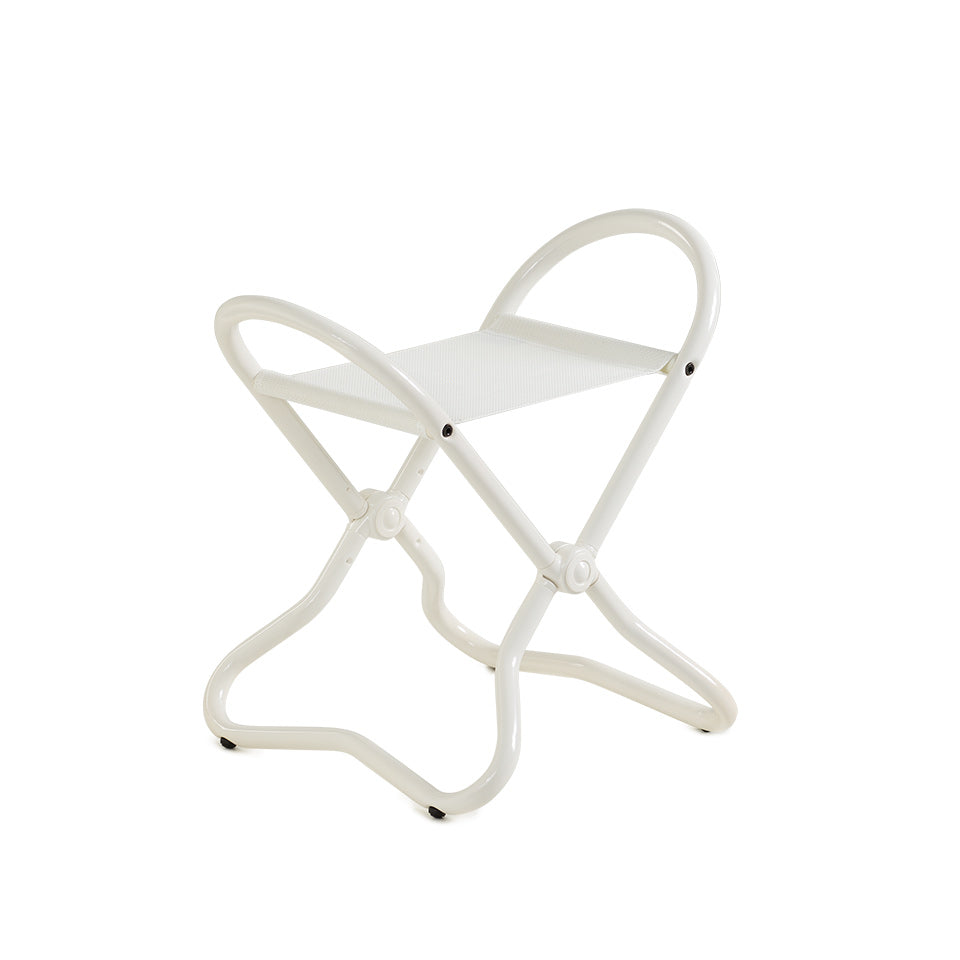
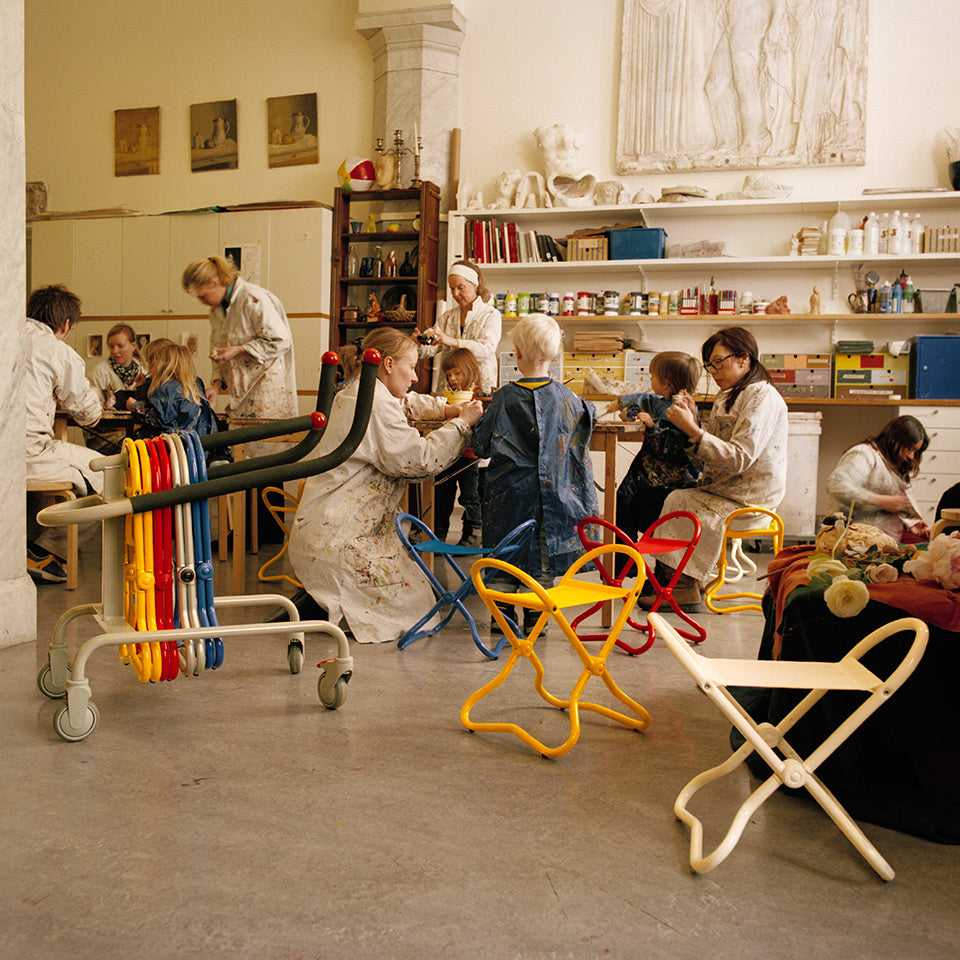
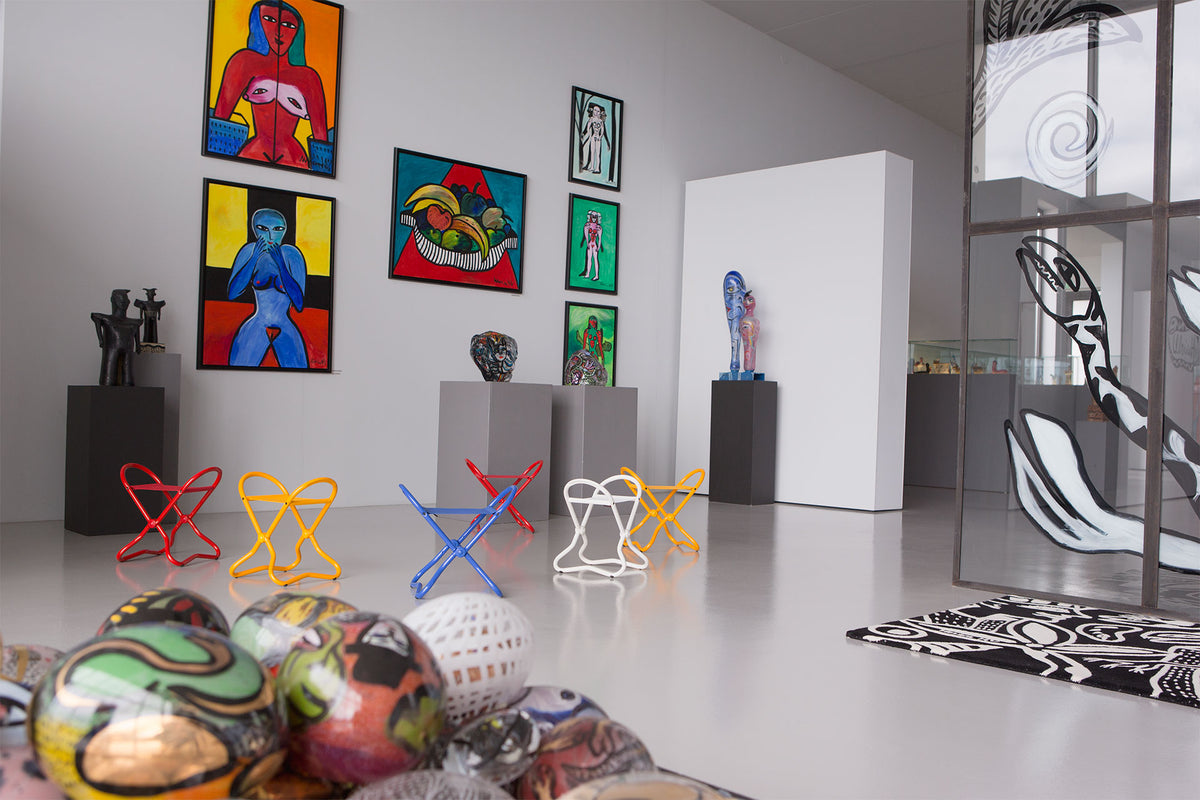
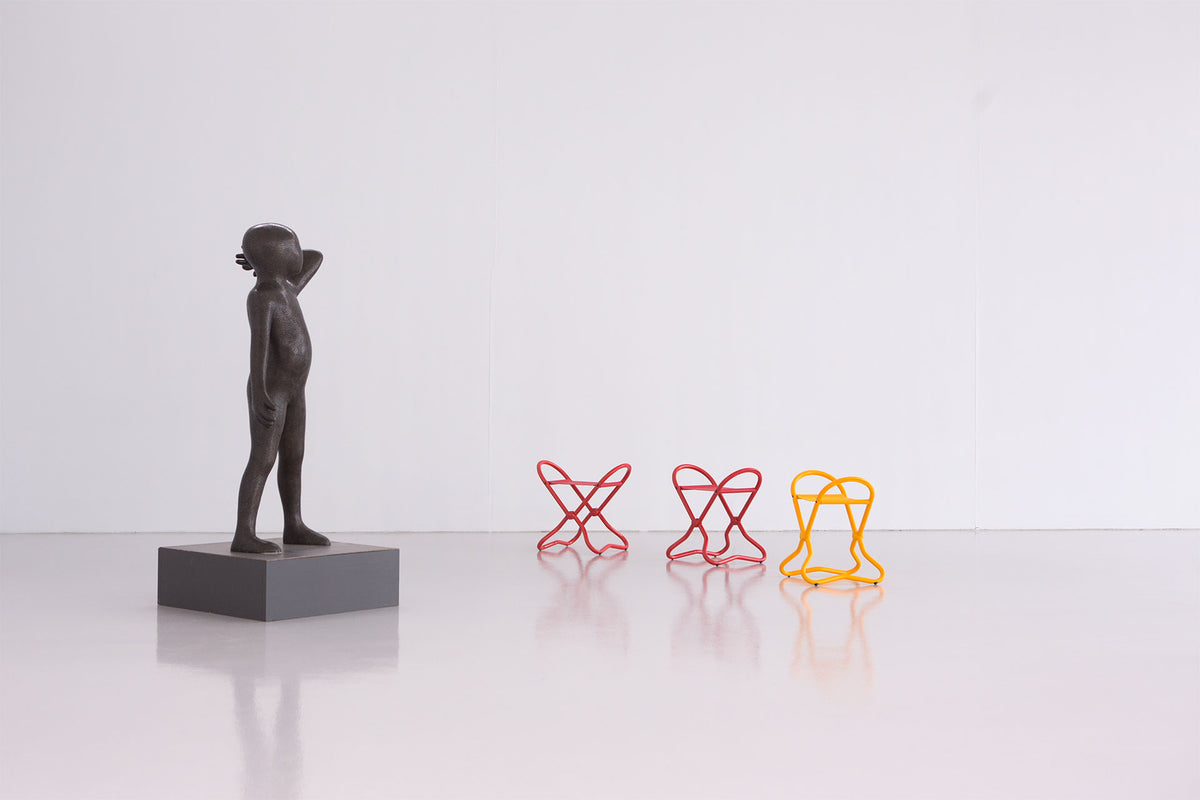
Hans Ehrich therefore looked for a manufacturing partner that could make the stool lighter without making it less stable. He chose Lectus Office AB in Mönsterås, a furniture company specialising in powder-coated aluminium tubes. Lectus developed a prototype based on Ehrich’s drawings. Made from aluminium, it weighed just 1.7 kg, and the stool was named STOCKHOLM II to distinguish it from the steel version.
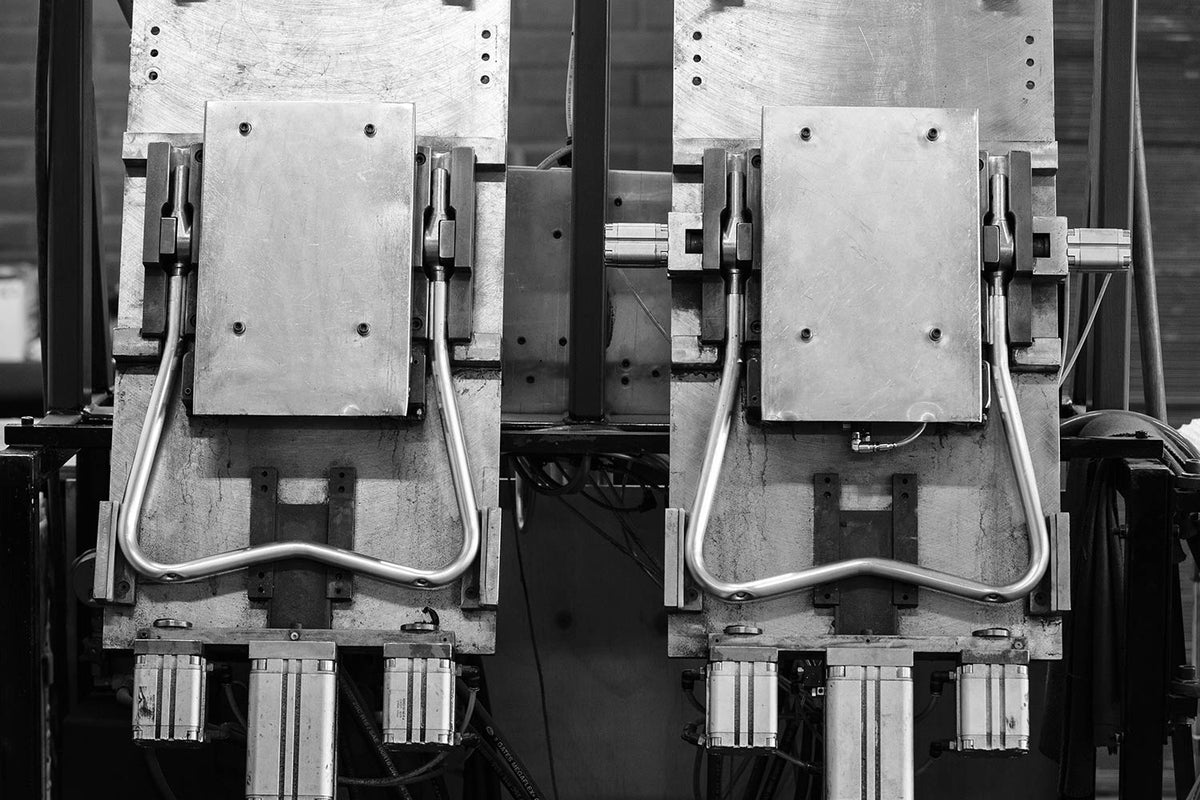
Made in Mönsterås, Sweden, since 1995
From bending the aluminium tubes to powder coating and assembly by hand. Read about how STOCKHOLM II and the other models in the range are made at Lectus Produktion.
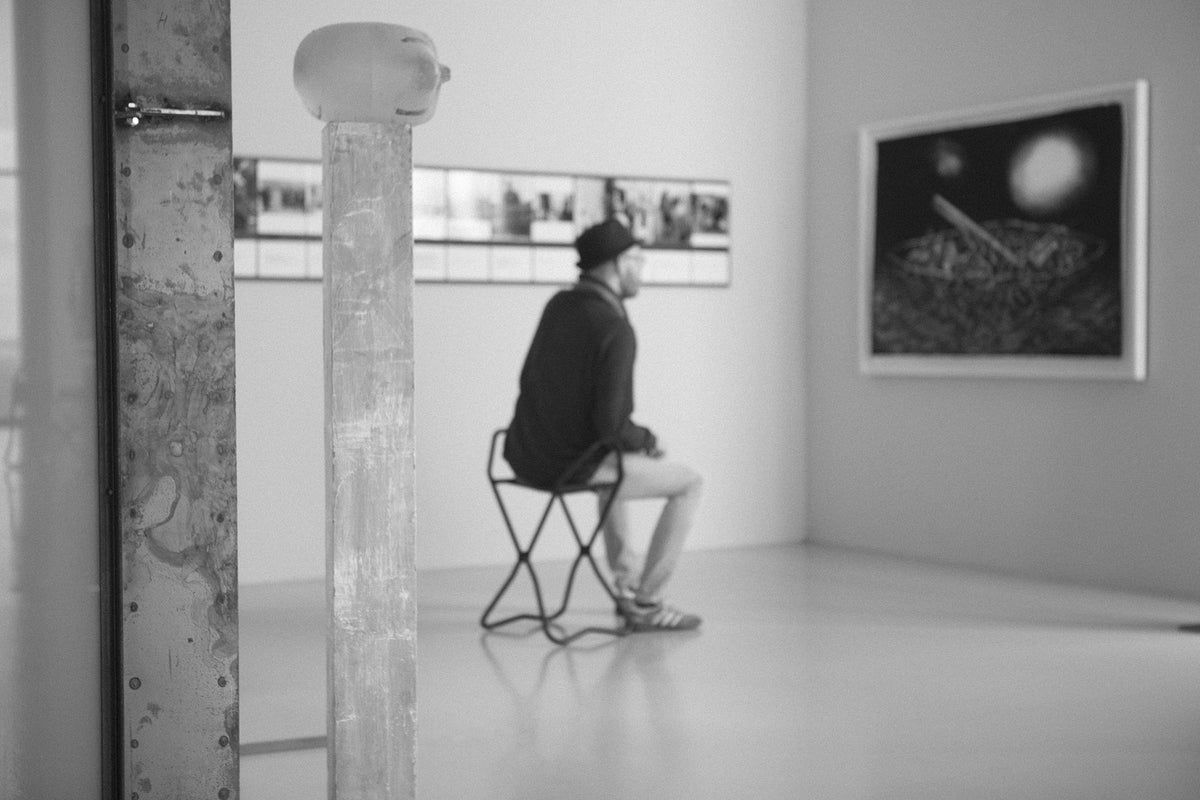
Since 1995, Lectus Produktion AB has manufactured STOCKHOLM II and the other models in the range, NEW YORK, CHICAGO and SNUPI under exclusive licence from the designers at A&E Design. Everything is made in Mönsterås, Sweden: the tubes are bent, the halves are powder-coated, and each stool is assembled by hand in the same factory. Today, the stools are used by museums in over 50 countries and are built to last for decades.
From steel to aluminium
The first stool, STOCKHOLM, was developed for the Nationalmuseum and manufactured in 1994 by an Italian furniture maker. A&E Design wanted the frame to be made of aluminium to make the stool easy to carry, but the manufacturer chose steel tubing. As a result, the 500 stools made for the Nationalmuseum were unnecessarily heavy.
A symbol of the company
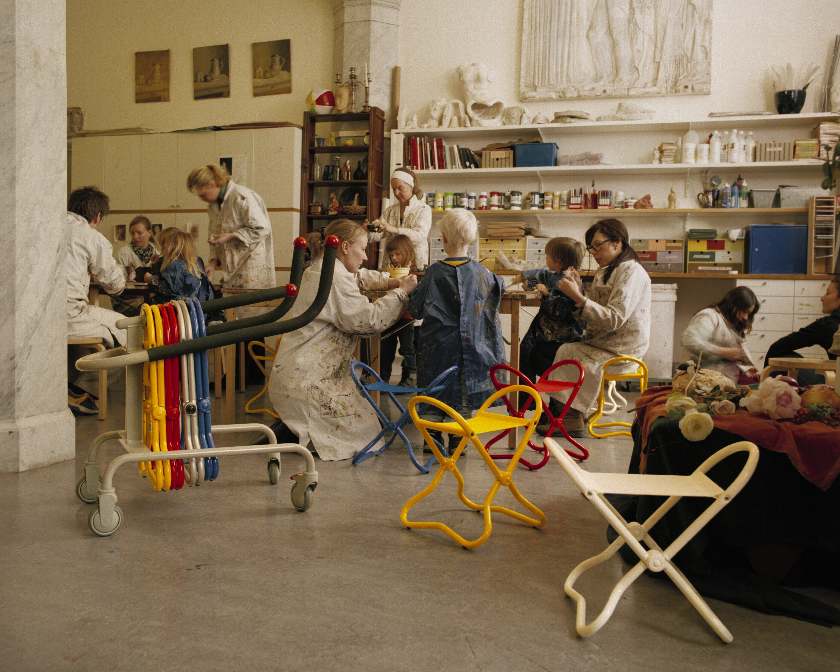
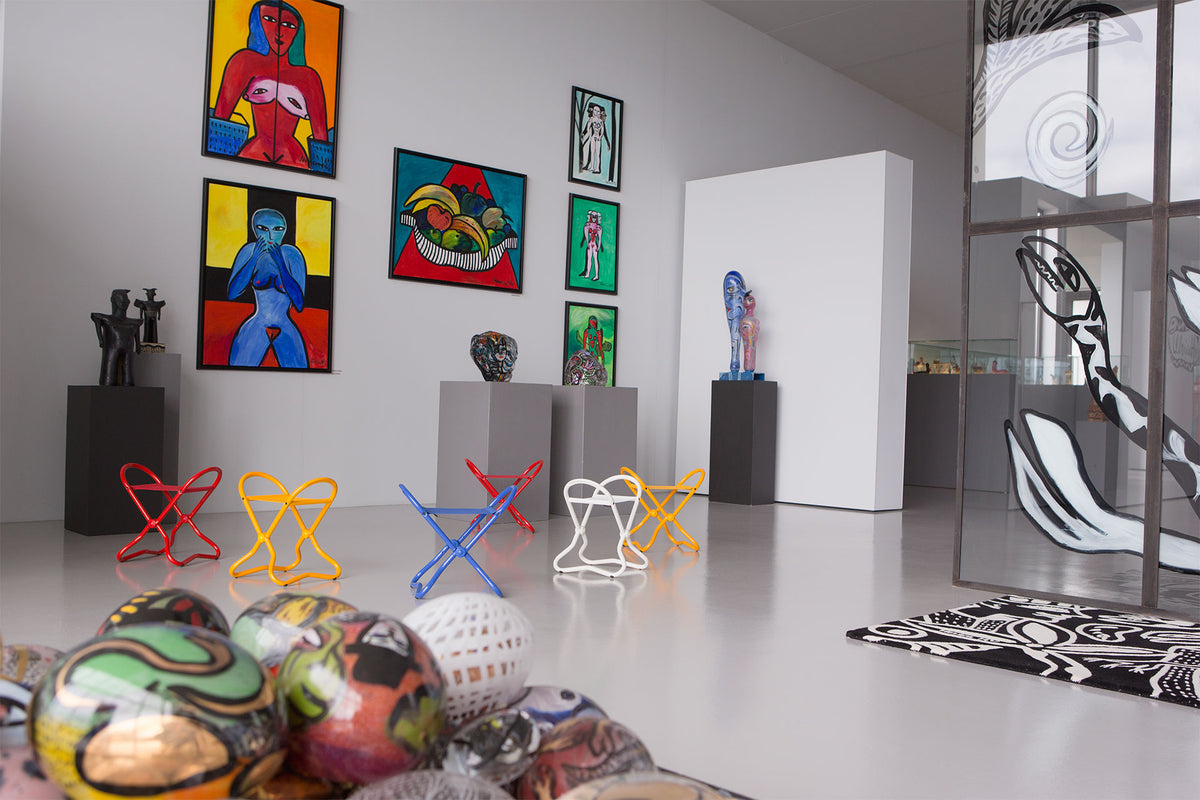
In 1997, STOCKHOLM II won the Red Dot Best of the Best, Red Dot’s highest award for design quality. The award gave the stool significant international exposure, and since 2011 it has been part of MoMA’s permanent design collection. The collaboration with A&E Design has now lasted over 30 years, and the stool has become part of Lectus’s identity. Today, four models are made: STOCKHOLM II, NEW YORK, CHICAGO and SNUPI, and they look much the same as when they were designed. The range also includes trolleys, floor stands and wall racks.
Tube bending
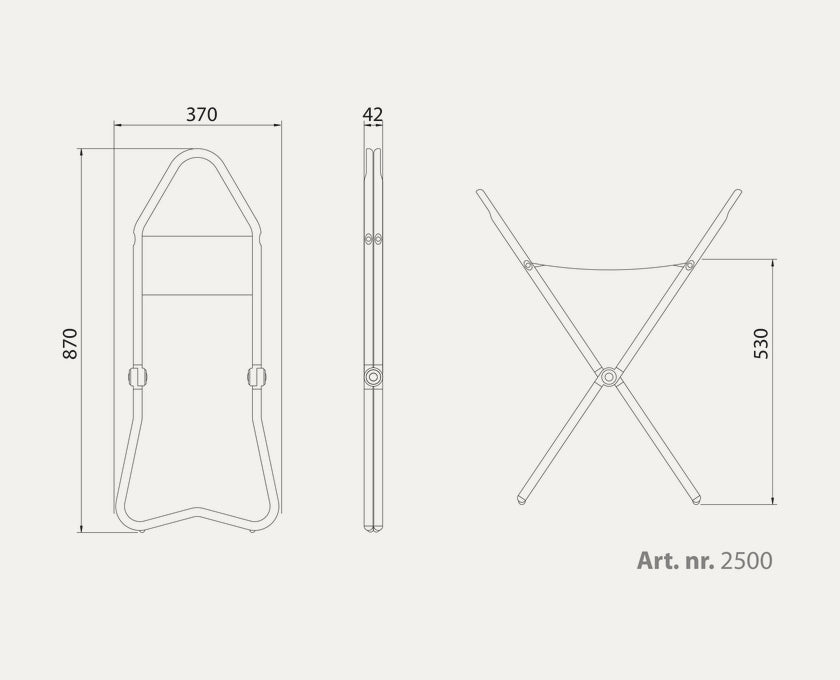
The aluminium tubes are bent and cut to form the stool’s two halves. The sides of the halves are identical, a feature built into the design from the outset to simplify manufacturing. Aluminium is sometimes called a living material. Despite fixed specifications, small variations occur, and these are compensated for through adjustments during assembly.
The joint
The heart of the stool is the joint, and it was the first part A&E Design developed. Ordinary folding stools are often wobbly and unstable, so the joint was designed not to move sideways, but instead to glide smoothly and lock the stool in the open position. It is made of die-cast aluminium with a stainless-steel reinforcement. Four identical components form the stool’s two joints, making the design both strong and easy to manufacture. Unlike a camping stool, the halves do not overlap, and the stool remains stable even when a visitor sits down off-centre.
Powder coating
The halves are powder-coated in Lectus’s own coating facility. The paint is sprayed on as a fine powder that adheres evenly all around the tube, then cured in an oven. The result is a hard-wearing surface that withstands knocks, scratches and daily use. The process is solvent-free, which is better for the environment. Any powder that does not adhere is collected and reused, and the air in the spray booth is purified and fed back into the process.
Assembly
The frame, joints and seat are assembled by hand. The seat has a mesh structure that lets air through and is more comfortable than a solid fabric seat. We use machinery, but production is not automated.
Spare parts
Because the stools are made here, spare parts are available for all models. A stool delivered in the 1990s can be fitted with a new seat today.
Why museums choose our stools
- The same manufacturer since 1995. One factory, one point of contact, from tube to finished stool.
- Built for public spaces. The stools are used daily by thousands of visitors, and test reports are available for STOCKHOLM II and NEW YORK.
- Spare parts for all models. A stool is repaired instead of replaced.
- Environmentally certified production. Lectus is certified to ISO 14001.
- Award-winning design. Red Dot Best of the Best and a place in MoMA’s permanent collection.
See the stools in our shop, or contact us for a quote for your museum.
Read more
The complete story of the stool, from the first sketches for the Nationalmuseum to today’s four models, is told in the book A&E Design – The Book, published by the Centre for Business History. The stool has its own chapter on pages 270–289.
The book is available from the Centre for Business History, Adlibris, Akademibokhandeln and Bokus.
Journal
Related articles
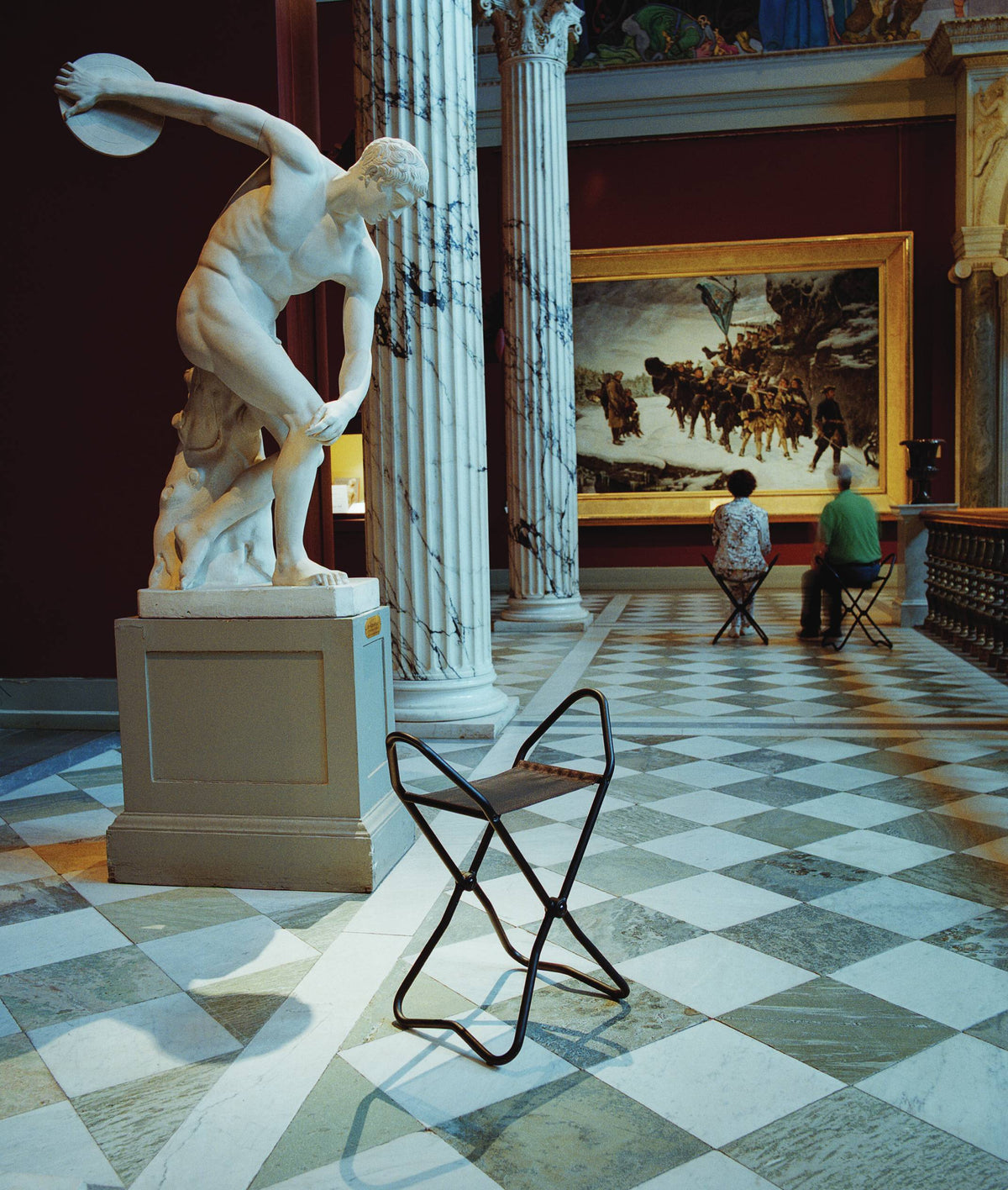
The story of STOCKHOLM II
From a practical need at the Nationalmuseum in Stockholm to a folding stool in more than 2,500 museums worldwide. This is the story of how STOCKHOLM II came about and grew into a family of folding stools.
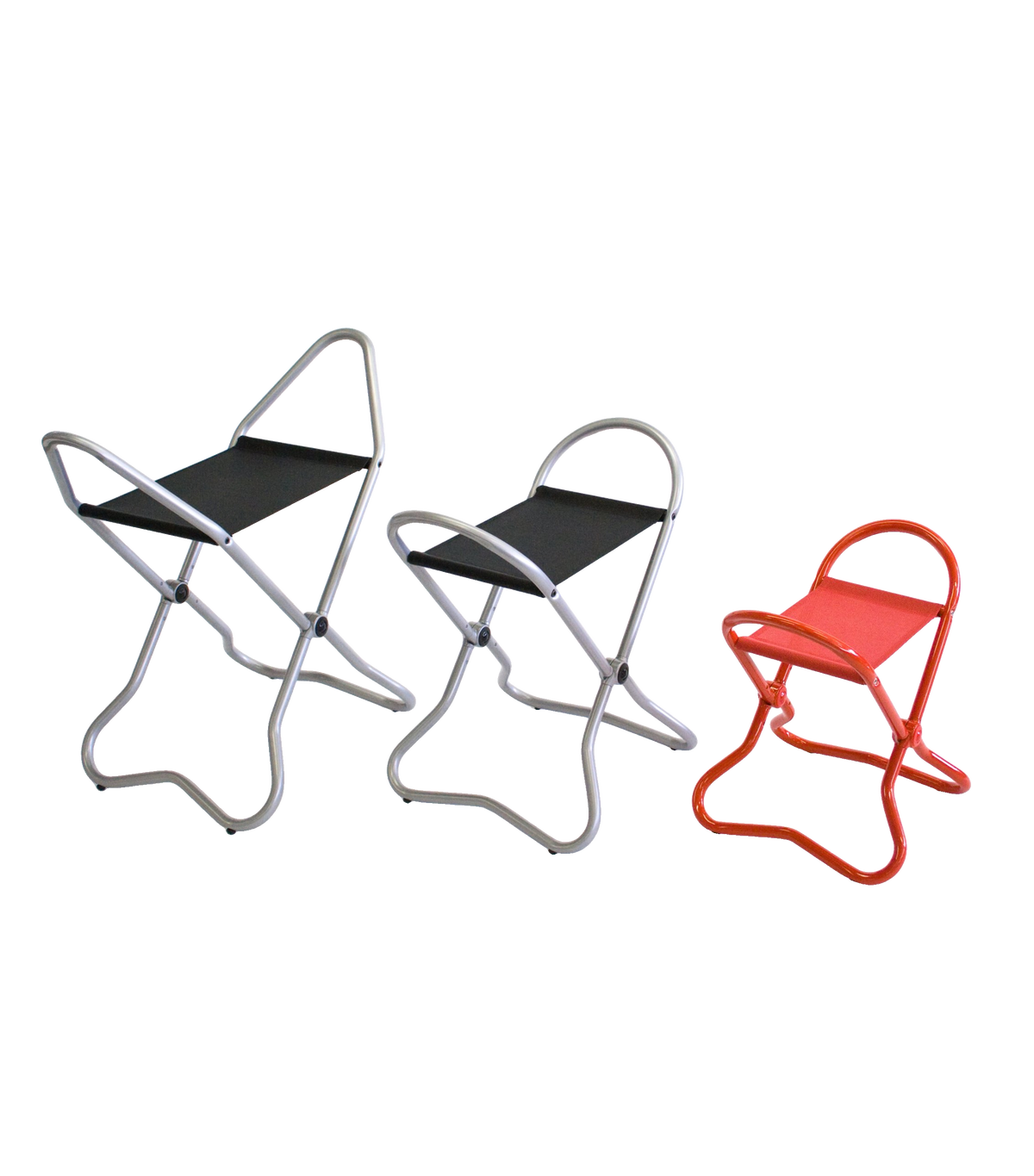
Four folding stools: which model suits your museum?
STOCKHOLM II, NEW YORK, CHICAGO and SNUPI are based on the same design in four sizes. Here are the differences to consider when choosing.
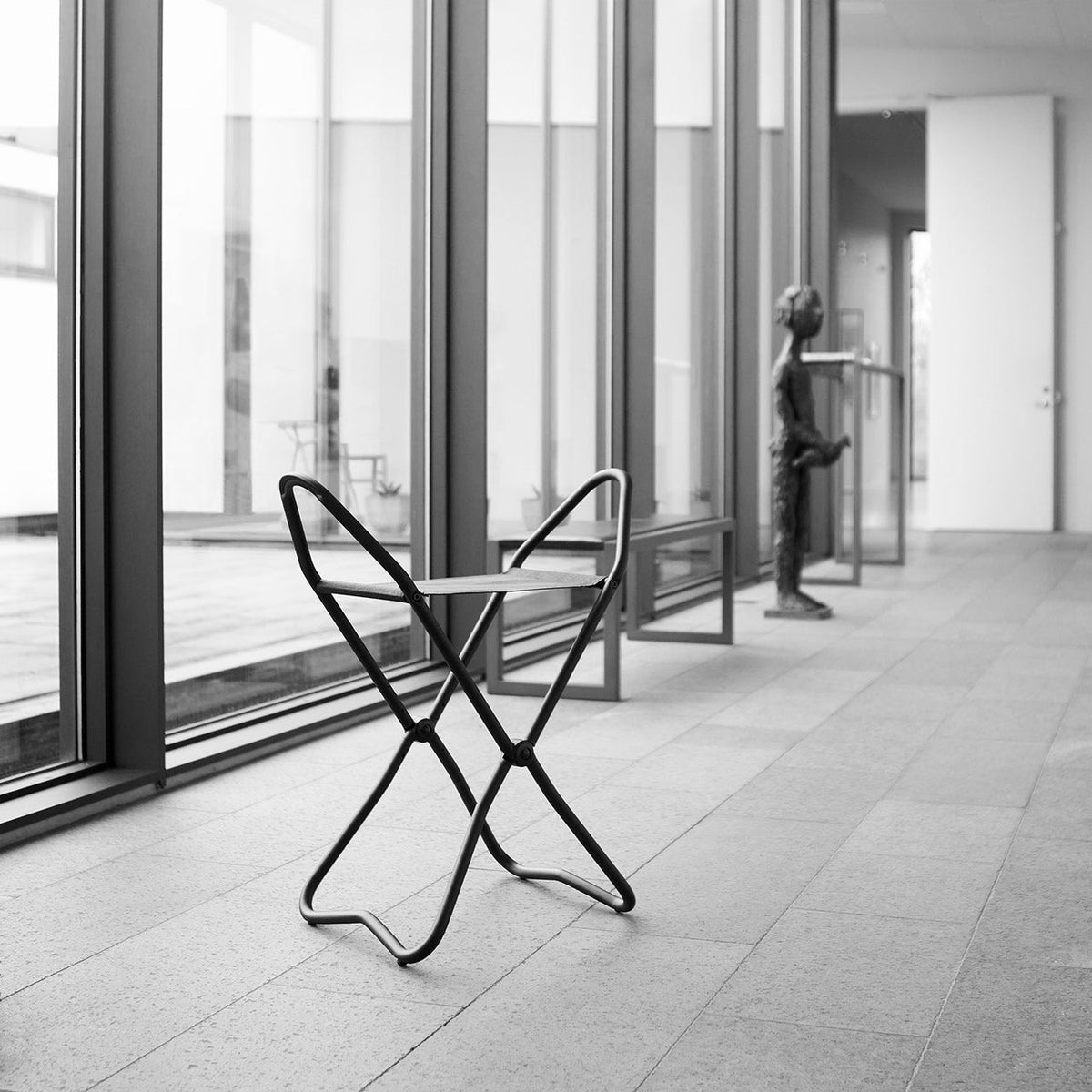
Red Dot and MoMA: STOCKHOLM II in the design world
From Excellent Swedish Design and Red Dot Best of the Best to MoMA's permanent collection. This is how a museum stool became an international design classic.